Finding the right PhD
You can read this article with responses grouped by researcher or by question.
Researchers:
- Ines Castro
- Steph Day
- Amy Jeffries
- Tayla Leathers
- Andrea Lopez Mobilia
- Joao Monteiro
- Uxue Moreda
- Mar Roca Mora
- Himmat Singh Bakshi
- Eloisa Toledo
Questions:
- WHAT MADE YOU CHOOSE THIS PhD?
- HOW DID YOU FIND THE STEP UP FROM UNDERGRADUATE / MASTER’S STUDIES, AND DO YOU FEEL SUPPORTED?
- WHAT OPPORTUNITIES DO YOU ENVISAGE OPENING UP AS A RESULT OF YOUR STUDIES?
- IS THERE ANYTHING ABOUT THE PROCESS OF FINDING A PhD THAT YOU WOULD HAVE DONE DIFFERENTLY IN HINDSIGHT?
- HOW DID YOU COME ACROSS THIS PhD OPPORTUNITY, AND WAS IT ONE OF SEVERAL YOU WERE CONSIDERING?
- WHAT GENERAL ADVICE YOU WOULD OFFER TO AN UNDERGRADUATE CONSIDERING A PhD?
PART 1: Responses grouped by researcher
INES CASTRO
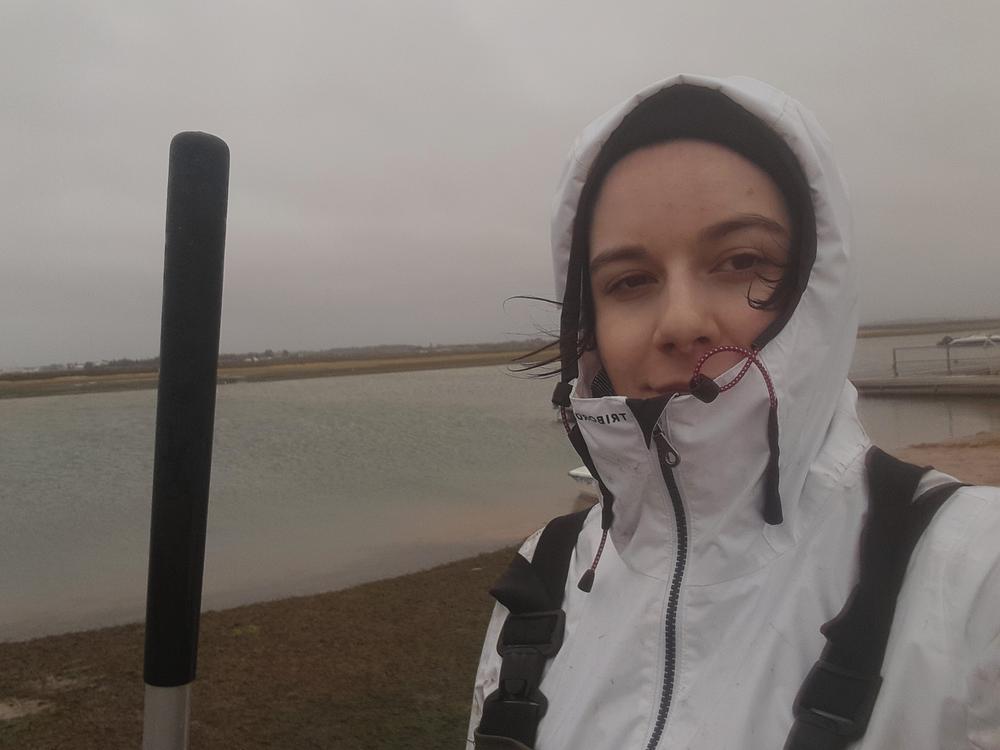
PhD: My PhD focuses on transmissible cancers in bivalves, using pathology screening, histology, and molecular tools to understand bivalve transmissible neoplasias (BTN) dynamics across different species and environments.
WHAT MADE YOU CHOOSE THIS PhD?
I chose this project because the topic genuinely fascinated me and the supervising team was exactly the kind of group I wanted to work with. Their expertise, openness, and collaborative style made me feel I’d be in the right environment to grow. Working with the right people mattered more to me than location or financial aspects.
HOW DID YOU FIND THE STEP UP FROM UNDERGRADUATE / MASTER’S STUDIES, AND DO YOU FEEL SUPPORTED?
The step up felt gigantic. I started my PhD feeling behind on everything, struggling to balance new independence with still needing support in many areas. My supervising team is excellent at reassuring me, helping me navigate uncertainty, and giving guidance without micromanaging. Their support makes the transition manageable, even when the workload and expectations feel overwhelming.
WHAT OPPORTUNITIES DO YOU ENVISAGE OPENING UP AS A RESULT OF YOUR STUDIES?
My PhD will open up opportunities across marine disease research, environmental genomics, and aquatic pathology, but also in areas far beyond transmissible cancers. The project is giving me highly transferable skills: molecular diagnostics, histology, project management, scientific communication, and international collaboration experience. These competencies can translate into roles in research institutes, conservation programs, biotech labs, or interdisciplinary environmental projects.
IS THERE ANYTHING ABOUT THE PROCESS OF FINDING A PhD THAT YOU WOULD HAVE DONE DIFFERENTLY IN HINDSIGHT?
The only part I underestimated was the bureaucracy. In hindsight, I wish I had talked to more PhD students beforehand to be better prepared for funding paperwork, institutional procedures, and administrative delays.
HOW DID YOU COME ACROSS THIS PhD OPPORTUNITY, AND WAS IT ONE OF SEVERAL YOU WERE CONSIDERING?
I came across this PhD through my Master’s project, during which I became interested in this topic and met my supervisor. I had wanted to work on transmissible cancers then but the chance hadn’t come up, so when this opportunity appeared it felt like a natural continuation of my scientific curiosity rather than a random choice.
WHAT GENERAL ADVICE YOU WOULD OFFER TO AN UNDERGRADUATE CONSIDERING A PhD?
Choose the right people above everything else. The supervising team shapes your daily life, confidence, and long-term success. Talk to current students, understand the lab culture, and make sure the mentorship style fits you. A PhD is demanding, so pick a topic you genuinely enjoy and a team that will support you through the inevitable highs and lows.
STEPH DAY
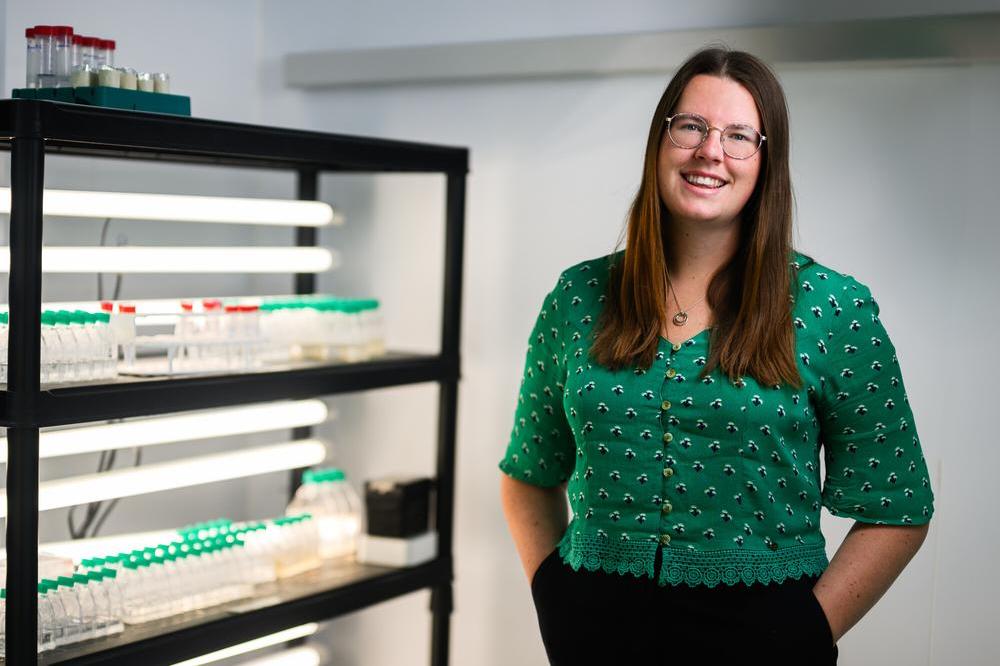
PhD: I am about to start my third year as a PhD studying in Plymouth, UK. My PhD looks at how phytoplankton (single celled ocean plants) interact with organic nutrients in coastal waters. It is important to better understand phytoplankton as they are at the bottom of the marine food chain, and they release approximately half of all the oxygen on earth. Phytoplankton require the nutrients nitrogen and phosphorus to grow and I am looking at how the organic forms of these nutrients change over different time scales in the English Channel and how this links to which phytoplankton species are present.
WHAT MADE YOU CHOOSE THIS PhD?
For me, the subject matter of the PhD was the most important thing when deciding which project to apply to. PhD’s are often 3-4 years full time in the UK so you need to select a topic that you can maintain enthusiasm for throughout the funding period. After that, I made sure to meet with the supervisors to learn more about the project and their research group dynamics. The supervisory relationship is really important so making sure my working style aligned with all my supervisors was a priority.
HOW DID YOU FIND THE STEP UP FROM UNDERGRADUATE / MASTER’S STUDIES, AND DO YOU FEEL SUPPORTED?
Your supervisory team, research group and PhD cohort (other students) are a great support throughout my PhD. I completed an independent project at undergraduate level before commencing my PhD which was great training for developing independent research skills which are at the core of a PhD. My university has a ‘Doctoral training program’ which offers regular workshops for some of the hard and soft skills which you may need to develop as a PhD student.
WHAT OPPORTUNITIES DO YOU ENVISAGE OPENING UP AS A RESULT OF YOUR STUDIES?
I hope my PhD provides more options when I graduate. I love learning and saw a PhD as a great opportunity to pursue a topic I was interested in (and get paid for it!). I am not wedded to staying in academia however I could see myself working in a science communication policy role or for an environmental consultancy. Regardless my PhD has provided skills in project management, problem solving and analytical and independent thinking which I will apply to any future roles.
IS THERE ANYTHING ABOUT THE PROCESS OF FINDING A PhD THAT YOU WOULD HAVE DONE DIFFERENTLY IN HINDSIGHT?
When looking for PhD’s I would recommend talking to other members of the research group in addition to your potential supervisor to get a feel of the research culture. In hindsight, I probably would have placed more emphasis on asking about how my PhD project aligns to their current work and grants. Some of my colleagues have had great networking opportunities through attending interinstitutional project meetings.
WHAT GENERAL ADVICE YOU WOULD OFFER TO AN UNDERGRADUATE CONSIDERING A PhD?
My PhD has been equally challenging and amazing. The opportunities and autonomy to lead your research direction is unique. Finding the right project, supervisory team and research environment for you is vital so if you are considering a PhD find some current PhD students to talk to; each PhD is unique so hearing about a variety of experiences is valuable. Most importantly good luck! Embarking on a PhD journey can be daunting but highly rewarding and I can honestly say it was the best decision for my career path.
AMY JEFFRIES
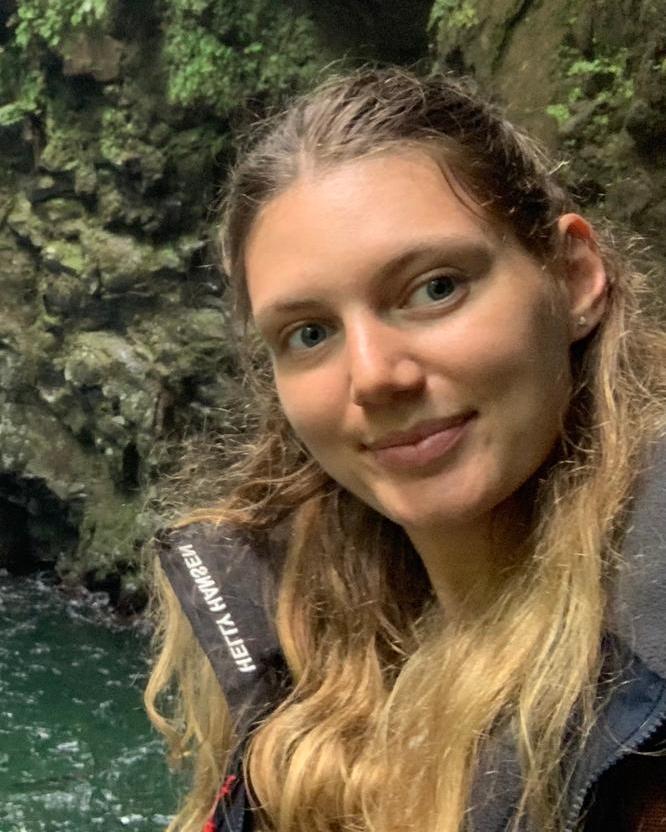
PhD: My PhD is about the movement and behavioural ecology of pelagic sharks and how they are responding to declining oxygen levels in our world oceans. I’m currently in the final year of my 4-year programme.
WHAT MADE YOU CHOOSE THIS PhD?
As I’m writing this, a video has just come up on social media from a mentor of mine, showing the day we actively tracked a great white shark in South Africa seven years ago. Tagging the shark and then following its movements for hours on the water is something I’ll never forget. After that experience, I was sold—studying predatory shark behaviour and movement ecology was what I wanted to do.
HOW DID YOU FIND THE STEP UP FROM UNDERGRADUATE / MASTER’S STUDIES, AND DO YOU FEEL SUPPORTED?
Starting a PhD was a big step up from my previous studies but everyone in the research group that I’m a part of is extremely supportive and helpful. In a PhD, you are in charge of your own time, and you have to keep yourself motivated. You’re also asking questions others don’t have the answers to and creating new knowledge is difficult! That is one of the parts I enjoy most about being a researcher.
WHAT OPPORTUNITIES DO YOU ENVISAGE OPENING UP AS A RESULT OF YOUR STUDIES?
There will be opportunities to continue into research or an academic career, but also during the PhD I am developing a range of transferable skills that would be valuable in many different settings outside of academia itself that could support a career in industry, consultancy, or even policy.
IS THERE ANYTHING ABOUT THE PROCESS OF FINDING A PhD THAT YOU WOULD HAVE DONE DIFFERENTLY IN HINDSIGHT?
I think going straight from a Master’s into a PhD can be quite a big step, particularly given how intense a one-year MSc programme can be. In hindsight, taking some time before starting a PhD might have been beneficial. Having said that, these opportunities don’t come around every day in this field, so you do have to take them while you can.
HOW DID YOU COME ACROSS THIS PhD OPPORTUNITY, AND WAS IT ONE OF SEVERAL YOU WERE CONSIDERING?
The PhD opportunity was advertised while I was completing my Master’s with the University of Plymouth and the MBA, and the position itself was with the same group I was doing my Master’s research project with. I was also already working on satellite telemetry data, so I was in a unique position to continue developing those skills and I wanted to make the most of the opportunity.
WHAT GENERAL ADVICE YOU WOULD OFFER TO AN UNDERGRADUATE CONSIDERING A PhD?
My main piece of advice would be to choose a project on a subject you enjoy and are interested in. A PhD is a long-term commitment and there are bound to be parts that are challenging, so if you are passionate about your topic, it can help keep you motivated during those periods. I’d also recommend looking into your potential supervisor’s research interests first because having a supervisor with knowledge of your project’s topic area can be really helpful when it comes to guiding and supporting your research.
TAYLA LEATHERS
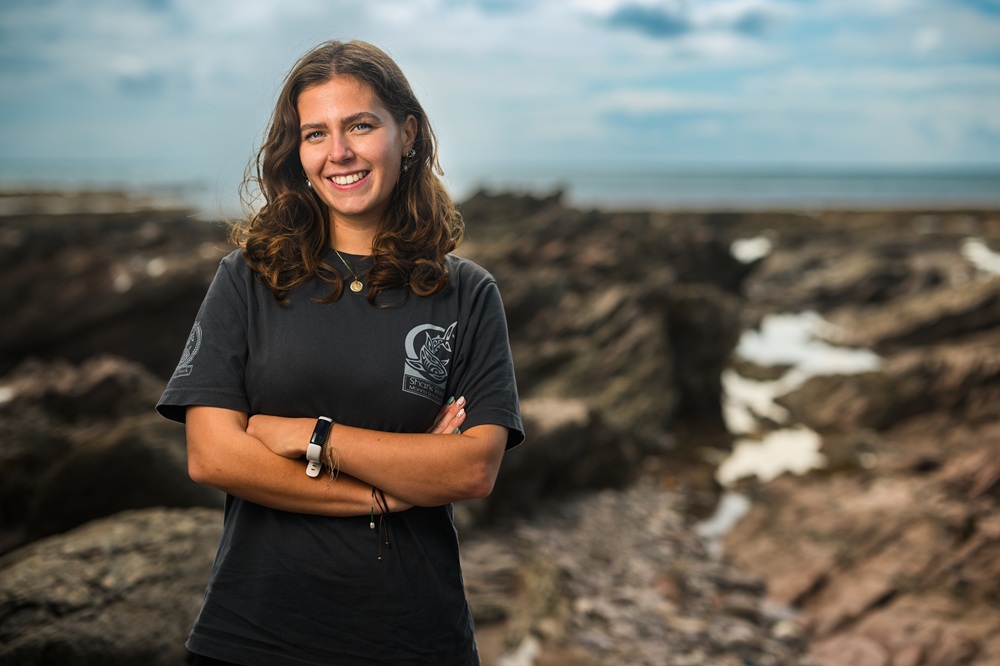
PhD: I am looking at the ‘futureproofing’ of UK kelp forests, particularly at the thermal tolerance of kelp species and how this may be affected by climate change.
WHAT MADE YOU CHOOSE THIS PhD?
Firstly, there was a good combination of field- and lab-based work, and it included skills and interests that I had already developed through my previous studies. Second, having previously worked as a research assistant with this research group, I knew that I would have good working relationships with the team. I also liked how the lead supervisor worked and what they would expect from a PhD student, so I thought I would be a good fit!
HOW DID YOU FIND THE STEP UP FROM UNDERGRADUATE / MASTER’S STUDIES, AND DO YOU FEEL SUPPORTED?
I had a previous work relationship with the team which allowed for me to step into this PhD role quite easily. The whole team and the rest of the MBA was very supportive throughout.
WHAT OPPORTUNITIES DO YOU ENVISAGE OPENING UP AS A RESULT OF YOUR STUDIES?
I have already been able to make many contacts from different institutes all over the world through conferences and workshops, some of which have subsequently developed into interesting collaborations within my PhD! I hope to capitalize on these relationships and expand them to give myself more opportunities in post-PhD life.
WHAT GENERAL ADVICE YOU WOULD OFFER TO AN UNDERGRADUATE CONSIDERING A PhD?
You really have to love the subject! You will be spending three to four years focusing on this one subject, so you have to find it interesting and engaging in order to commit to it. I have had a brilliant time so far throughout my PhD, and although it can be stressful, it is worth it when you really love what you do.
Also, I think having the right supervisor really makes a difference! I have been lucky in that we communicate well and I know what is expected from me and what I want to deliver. I think a supervisor who respects you as a researcher is one of the most important things, especially moving away from a ‘student’ role and more into that of an independent researcher.
ANDREA LOPEZ MOBILIA
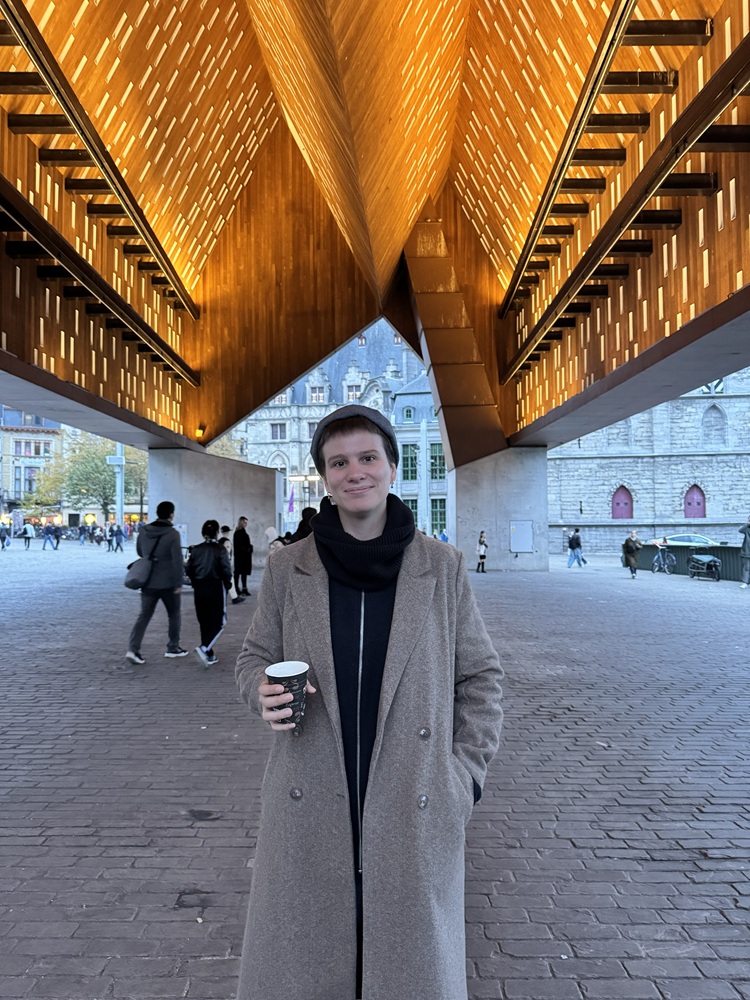
PhD: My PhD is about marine natural products from coral-associated bacteria. We are targeting new active compounds to combat human or aquaculture pathogens, or that have antioxidant, antibiofilm, or UV-protection properties.
WHAT MADE YOU CHOOSE THIS PhD?
The subject as presented in the proposal was what I wanted to study, the location in northern Italy seemed great, and the financial aspect was a huge consideration. All these factors contributed to my decision. Overall, it seemed like a fantastic opportunity as I could potentially learn and live comfortably.
HOW DID YOU FIND THE STEP UP FROM UNDERGRADUATE / MASTER’S STUDIES, AND DO YOU FEEL SUPPORTED?
I am from Peru and we do things a bit differently there. A Master’s degree is considered a specialization so instead of going directly from an undergraduate degree to a Master’s, we work first. I felt supported by very good friends and people I admire. I went into an Erasmus Mundus Joint Master Degree in Aquaculture, Environment and Society because I saw it had microbiology courses and I was interested in learning more in that area. It was not that I had a professor suggesting Europe or anything like that, it was mainly me looking into funded opportunities outside my own country.
WHAT OPPORTUNITIES DO YOU ENVISAGE OPENING UP AS A RESULT OF YOUR STUDIES?
I am planning to go back to my country, I hope I can work in a University there and also start relating a bit with the politics side of things. I believe there is a lack of scientific representation in those areas in my country, and it is important to not only work from the lab but try to make changes on a larger scale that can benefit everyone. So hopefully, that will happen.
IS THERE ANYTHING ABOUT THE PROCESS OF FINDING A PhD THAT YOU WOULD HAVE DONE DIFFERENTLY IN HINDSIGHT?
I was very organized and constantly checked new PhD opportunities and made sure I kept up to date with the different offers. In hindsight, I could have considered northern countries more seriously. I had given myself a ‘northern limit’ because of the weather and neglected to look into the bureaucracy side of things which has proven to be hard to deal with in northern Italy. That aside, I believe I did a good job.
HOW DID YOU COME ACROSS THIS PhD OPPORTUNITY, AND WAS IT ONE OF SEVERAL YOU WERE CONSIDERING?
I wanted to get into biotechnology and microbiology and learn new methodologies (such as omics), so I was considering opportunities and seeing if I was a good fit. In total I applied for eight PhDs.
WHAT GENERAL ADVICE YOU WOULD OFFER TO AN UNDERGRADUATE CONSIDERING A PhD?
When choosing a PhD be mindful of the place you will be working, both as a city and a place of work. Ask people that are working there and PhD students what it is like as a place to live. Remember that it is very unlikely that everything will be 100 per cent perfect: city, social life, work, weather, salary, and so on, so be ready to sacrifice one of those things and be sure you can be ok with that for the time being. A PhD is stressful by itself so try to not make it harder! Besides that learn, make mistakes and enjoy 😊
JOAO MONTEIRO
PhD: My PhD focuses on analysing the biological, fishery, and socioeconomic dimensions of the green crab fishery in Portugal.
WHAT MADE YOU CHOOSE THIS PhD?
The project I joined in 2019 still had important tasks pending, and the work is extremely relevant for creating a more sustainable fishery in Portugal. My PhD has already contributed directly to evidence-based fisheries management, and my findings have supported national regulatory changes aimed at increasing both the profitability and sustainability of the green crab fishery.
HOW DID YOU FIND THE STEP UP FROM UNDERGRADUATE / MASTER’S STUDIES, AND DO YOU FEEL SUPPORTED?
I was fortunate enough to secure a master's scholarship to work with the same crab species right after finishing my Master's degree. Since I continued working on the same project and species through to my doctorate, the transition was very smooth, and I received great support from my supervisor.
WHAT OPPORTUNITIES DO YOU ENVISAGE OPENING UP AS A RESULT OF YOUR STUDIES?
The results of my PhD will contribute to proposing new regulatory measures for this currently unregulated fishery. With this background and experience, I believe I will be able to contribute to the regulation and sustainability of other fisheries in the future.
IS THERE ANYTHING ABOUT THE PROCESS OF FINDING A PhD THAT YOU WOULD HAVE DONE DIFFERENTLY IN HINDSIGHT?
The entire process and professional pathway felt very natural, and opportunities arose progressively as I advanced in my studies.
HOW DID YOU COME ACROSS THIS PhD OPPORTUNITY, AND WAS IT ONE OF SEVERAL YOU WERE CONSIDERING?
After finishing my Master's thesis in 2019, I began looking for job opportunities and came across a Master's fellowship working with a crab fishery regulation. When that project ended, I applied for a Portuguese PhD fellowship and was awarded one to continue with the same project.
WHAT GENERAL ADVICE YOU WOULD OFFER TO AN UNDERGRADUATE CONSIDERING A PhD?
A PhD is not just about your project; it is a stage of discovery, a time to create your own space, and the ideal moment to define yourself as a researcher. It is also when you come to understand whether a research career is truly what you want for your future. My advice is not to stay closed in the bubble of your PhD project, help other colleagues and build your network.
UXUE MOREDA
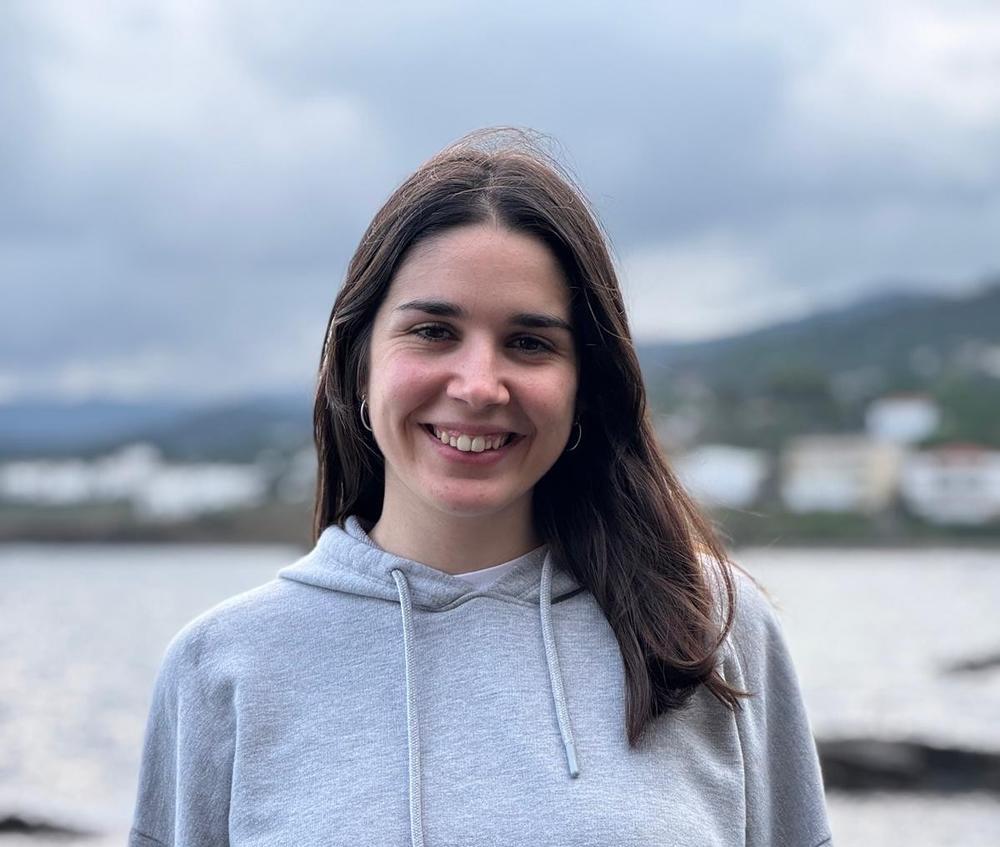
PhD: My PhD focuses on the distribution, climate-driven vulnerability, biodiversity, and carbon sequestration potential of Mediterranean mesophotic kelp forests.
WHAT MADE YOU CHOOSE THIS PhD?
One of the reasons I chose this PhD was my passion for macroalgal ecology and conservation, which began during my undergraduate studies. However, the deciding factor was the research team and supervisors. I really admire their approach to science—meaningful, grounded, and collaborative—and how they care about both environmental issues and people.
HOW DID YOU FIND THE STEP UP FROM UNDERGRADUATE / MASTER’S STUDIES, AND DO YOU FEEL SUPPORTED?
The transition was very rewarding, as I was able to put into practice the knowledge gained during my undergraduate and Master’s studies. I have felt fully supported throughout my journey, specially by my supervisors, who were also my Master’s thesis supervisors. They have been key mentors, offering both academic and personal support, and encouraging my development.
WHAT OPPORTUNITIES DO YOU ENVISAGE OPENING UP AS A RESULT OF YOUR STUDIES?
This journey is really helping me grow both scientifically and personally. I’m learning a lot about the marine environment and gaining skills that I hope will allow me to keep working in research, collaborate with others, keep exploring new ideas and overall, contribute meaningfully to the conservation of the oceans.
HOW DID YOU COME ACROSS THIS PhD OPPORTUNITY, AND WAS IT ONE OF SEVERAL YOU WERE CONSIDERING?
During my Master’s thesis, I built a close relationship with my supervisors and research team, and we all felt it was a great fit to continue working together. We developed a project following our research interests, and I applied to different funding schemes until I secured a PhD fellowship.
WHAT GENERAL ADVICE YOU WOULD OFFER TO AN UNDERGRADUATE CONSIDERING A PhD?
A PhD can be a great experience if you enjoy research and feel curious about the questions you want to explore. It is important to choose a supportive supervisor and a good research environment, as this really shapes your experience. Passion and positive relationships are essential to stay motivated through challenges.
MAR ROCA MORA
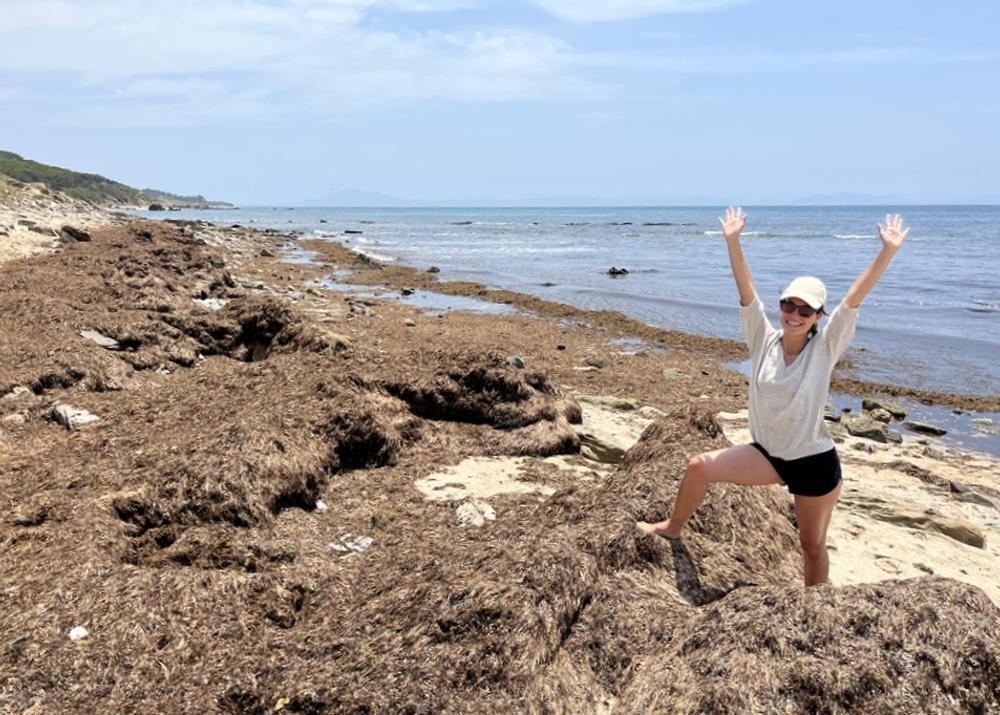
PhD: My PhD ‘Monitoring marine macrophytes: new tools based on aquatic remote sensing techniques’ is focused on ocean colour remote sensing through multi- and hyperspectral sensors (field radiometers, UAVs, and Sentinel-2/Landsat satellites).
WHAT MADE YOU CHOOSE THIS PhD?
The Senior Researcher had focus on remote sensing of coastal areas which was an area I was interested in and which aligned with my MSc on coastal management. The PhD was an opportunity to understand how to use satellite technology to monitor changes in coastal ecosystems. I was also attracted by the location in southern Spain, but it took me some time to decide if the PhD was financially viable, as the salary was especially low.
HOW DID YOU FIND THE STEP UP FROM UNDERGRADUATE / MASTER’S STUDIES, AND DO YOU FEEL SUPPORTED?
I was very clear from the beginning, and I went straight for a GIS Data Science Master’s in a private company. Rather than advancing slowly in academia, I saw my role more in applied technology for users to facilitate better management of our coasts. I had my undergraduate professor’s support on this decision, and she encouraged me to go for it (with no intention to do a PhD at all!).
WHAT OPPORTUNITIES DO YOU ENVISAGE OPENING UP AS A RESULT OF YOUR STUDIES?
The PhD journey was transformational for me, developing resilience and creativity and teaching organizational, teamwork, and strategic skills. Earning your PhD can open an entire universe of opportunities, from writing a postdoc somewhere in the world, to jumping into an R&D company, or even starting your own business. I have always had a hybrid approach, so I see myself in both worlds: doing science and transferring knowledge for coastal conservation and marine spatial planning.
IS THERE ANYTHING ABOUT THE PROCESS OF FINDING A PhD THAT YOU WOULD HAVE DONE DIFFERENTLY IN HINDSIGHT?
Maybe I was not looking for a PhD offer because I did not have any platform to compare from. I would like to have been better informed about cutting-edge topics in marine sciences and online platforms where I could search opportunities. I was focused on establishing myself in a private company because PhD opportunities were not attractive to me at the time. However, in hindsight I think if I had the information, I would have at least looked for a PhD opportunity abroad.
HOW DID YOU COME ACROSS THIS PhD OPPORTUNITY, AND WAS IT ONE OF SEVERAL YOU WERE CONSIDERING?
A professor suggested that I apply while I was doing an introductory research fellowship at CSIC. I never considered doing a PhD, but due to the instability of the COVID19 situation, a 4-year contract in science appeared to be a good opportunity in a field I was already enjoying and willing to explore further.
WHAT GENERAL ADVICE YOU WOULD OFFER TO AN UNDERGRADUATE CONSIDERING A PhD?
I would suggest that undergraduates explore both worlds: working in a private company and in a research institute or university. At university, there are opportunities to experience the scientific method as an intern or volunteer. After, if you are curious, you can explore how companies work and figure out what you enjoy the most. If you are convinced about a PhD, look for a Master’s that complements your bachelor skills rather than repeating content, and talk to the relevant academic staff about PhD options. Above all, before committing to a PhD contract, speak to people who have done a PhD with that researcher.
HIMMAT SINGH BAKSHI
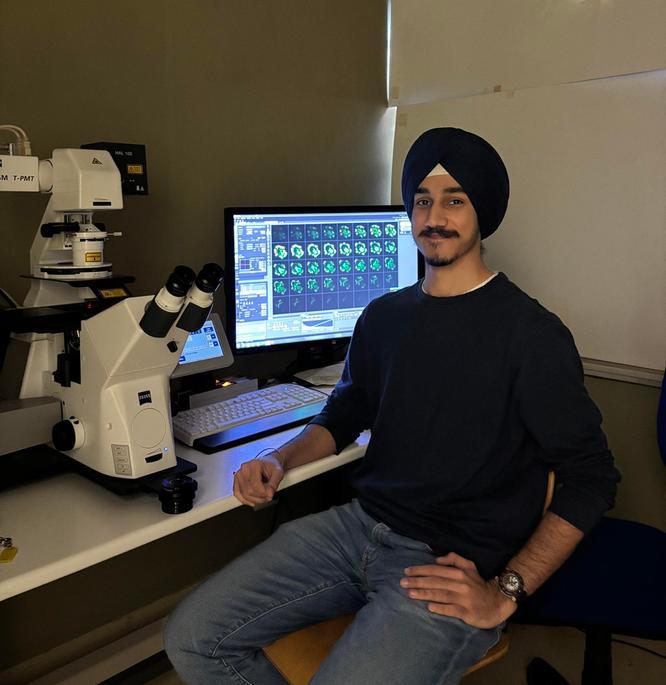
PhD: My research focuses on the embryonic origins, biological function, and biotechnological potential of a newly discovered fluorescent cell type in sea cucumbers.
WHAT MADE YOU CHOOSE THIS PhD?
I was entirely won over by the project's challenging nature. Transitioning from biodiversity and conservation into unfamiliar evo-devo biology was a high-risk, high-reward leap that I knew would be very advantageous for my professional growth and maturity.
HOW DID YOU FIND THE STEP UP FROM UNDERGRADUATE / MASTER’S STUDIES, AND DO YOU FEEL SUPPORTED?
I felt incredibly supported during the transition. My supervisor is exceptionally encouraging and understanding, providing the guidance I need at every turn. Thanks to the nature of this environment, I am experiencing an exponential learning and growth curve, both personally and professionally. This has really fuelled my confidence and momentum as an early-career researcher.
WHAT OPPORTUNITIES DO YOU ENVISAGE OPENING UP AS A RESULT OF YOUR STUDIES?
Post-PhD, I aim to remain in academia and pursue a postdoc to maintain research momentum. Alongside this, I want to expand my leadership roles in supporting and advocating for early-career researchers within the marine biology community, helping others navigate this field just as OYSTER has allowed me to do.
IS THERE ANYTHING ABOUT THE PROCESS OF FINDING A PhD THAT YOU WOULD HAVE DONE DIFFERENTLY IN HINDSIGHT?
Absolutely nothing. I used a variety of job boards, social media platforms, and individually contacted labs and PIs. It was a demanding process but I did everything I possibly could, and I have zero regrets.
HOW DID YOU COME ACROSS THIS PhD OPPORTUNITY, AND WAS IT ONE OF SEVERAL YOU WERE CONSIDERING?
I discovered the call for this project online through social media platforms and specialized job boards. It was one of several positions I was considering during a long and strenuous application process.
WHAT GENERAL ADVICE YOU WOULD OFFER TO AN UNDERGRADUATE CONSIDERING A PhD?
Be certain a PhD is what you want, and what you need. It demands sacrifices and passes in a heartbeat. Prioritise finding the right topic, supervisor, institute, and location. Ultimately, a PhD is a highly individualised testament to your own motivation, work ethic, and perseverance. It is a journey designed to build you up, not break you down.
ELOISA TOLEDO
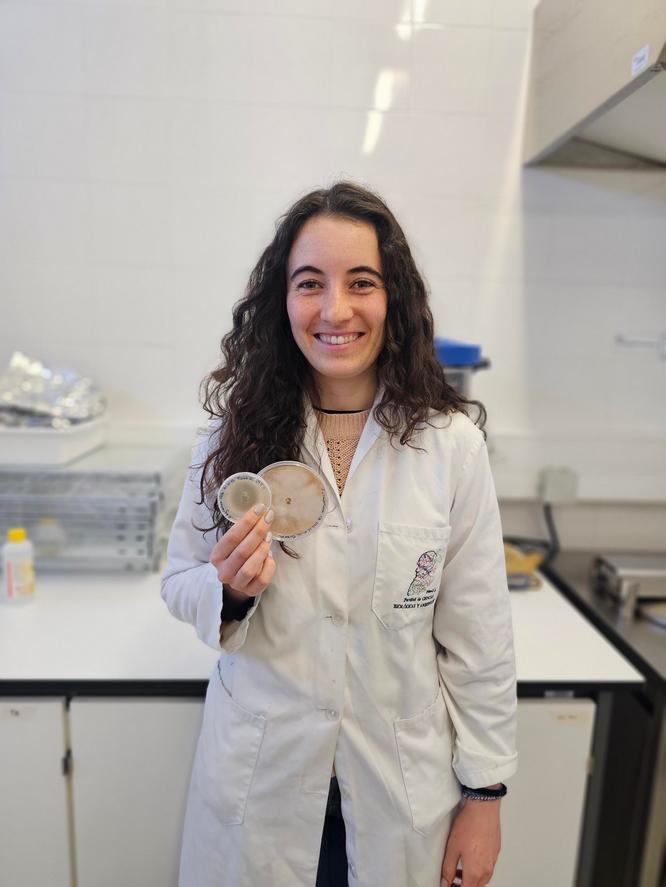
PhD: My doctoral research focuses on invasive seaweeds as sustainable sources of bioactive compounds to control phytopathogenic fungi affecting citrus production.
WHAT MADE YOU CHOOSE THIS PhD?
I chose this PhD because it is a continuation of my Master's research, shifting from pears to oranges due to their economic importance in the Iberian Peninsula, while continuing to explore invasive seaweeds because of their environmental impact. I was awarded an FCT scholarship in Portugal, but the main reason was the opportunity to keep working with my supervisory team.
HOW DID YOU FIND THE STEP UP FROM UNDERGRADUATE / MASTER’S STUDIES, AND DO YOU FEEL SUPPORTED?
The biggest transition for me was from undergraduate to Master's studies, as it was my first experience conducting independent research. In Portugal, the Master's includes a full year dedicated to the thesis, which prepared me well for a PhD. As a result, the transition was smooth, and I have always felt well supported by my supervisory team.
WHAT OPPORTUNITIES DO YOU ENVISAGE OPENING UP AS A RESULT OF YOUR STUDIES?
I would like to continue in academia because I genuinely enjoy research. However, post-PhD opportunities in Portugal are limited and highly competitive, so I may need to move abroad. If I cannot secure a stable academic position, I would consider an R&D career in industry, combining scientific research with the long-term professional stability I value.
IS THERE ANYTHING ABOUT THE PROCESS OF FINDING A PhD THAT YOU WOULD HAVE DONE DIFFERENTLY IN HINDSIGHT?
If I had explored PhD opportunities at other research institutions instead of focusing on continuing my master's project, doors might have opened to different funding schemes and collaborations. However, my decision allowed me to build on my previous experience, progress faster, and ultimately get the most out of my PhD.
HOW DID YOU COME ACROSS THIS PhD OPPORTUNITY, AND WAS IT ONE OF SEVERAL YOU WERE CONSIDERING?
I completed my Master's thesis at the same research centre (MARE – University of Leiria and West) where this PhD opportunity arose. From the beginning of my Master's, I already knew I wanted to pursue a PhD so I aimed to build on my thesis work. This was the only PhD position I considered, as I was passionate about the topic and the research team.
WHAT GENERAL ADVICE YOU WOULD OFFER TO AN UNDERGRADUATE CONSIDERING A PhD?
A PhD is not the easiest path. It requires resilience, patience, and long hours that are not reflected in financial rewards. However, it can be incredibly fulfilling if you enjoy research. My biggest advice is to choose supportive supervisors over the ‘perfect’ project, as a good team can make all the difference throughout your PhD journey.
With thanks to Toni Vivo, co-chair of the OYSTER (Orienting Young ScienTists of EuromaRine) group.
OYSTER provides support, skill development, networking opportunities, and more for Early Career Scientists in marine science.
For more information, contact: oyster@euromarinenetwork.eu
Back to topPART 2: Responses grouped by question
WHAT MADE YOU CHOOSE THIS PhD?
INES CASTRO
I chose this project because the topic genuinely fascinated me and the supervising team was exactly the kind of group I wanted to work with. Their expertise, openness, and collaborative style made me feel I’d be in the right environment to grow. Working with the right people mattered more to me than location or financial aspects.
STEPH DAY
For me, the subject matter of the PhD was the most important thing when deciding which project to apply to. PhD’s are often 3-4 years full time in the UK so you need to select a topic that you can maintain enthusiasm for throughout the funding period. After that, I made sure to meet with the supervisors to learn more about the project and their research group dynamics. The supervisory relationship is really important so making sure my working style aligned with all my supervisors was a priority.
AMY JEFFRIES
As I’m writing this, a video has just come up on social media from a mentor of mine, showing the day we actively tracked a great white shark in South Africa seven years ago. Tagging the shark and then following its movements for hours on the water is something I’ll never forget. After that experience, I was sold—studying predatory shark behaviour and movement ecology was what I wanted to do.
TAYLA LEATHERS
Firstly, there was a good combination of field- and lab-based work, and it included skills and interests that I had already developed through my previous studies. Second, having previously worked as a research assistant with this research group, I knew that I would have good working relationships with the team. I also liked how the lead supervisor worked and what they would expect from a PhD student, so I thought I would be a good fit!
ANDREA LOPEZ MOBILIA
The subject as presented in the proposal was what I wanted to study, the location in northern Italy seemed great, and the financial aspect was a huge consideration. All these factors contributed to my decision. Overall, it seemed like a fantastic opportunity as I could potentially learn and live comfortably.
JOAO MONTEIRO
The project I joined in 2019 still had important tasks pending, and the work is extremely relevant for creating a more sustainable fishery in Portugal. My PhD has already contributed directly to evidence-based fisheries management, and my findings have supported national regulatory changes aimed at increasing both the profitability and sustainability of the green crab fishery.
UXUE MOREDA
One of the reasons I chose this PhD was my passion for macroalgal ecology and conservation, which began during my undergraduate studies. However, the deciding factor was the research team and supervisors. I really admire their approach to science—meaningful, grounded, and collaborative—and how they care about both environmental issues and people.
MAR ROCA MORA
The Senior Researcher had focus on remote sensing of coastal areas which was an area I was interested in and which aligned with my MSc on coastal management. The PhD was an opportunity to understand how to use satellite technology to monitor changes in coastal ecosystems. I was also attracted by the location in southern Spain, but it took me some time to decide if the PhD was financially viable, as the salary was especially low.
HIMMAT SINGH BAKSHI
I was entirely won over by the project's challenging nature. Transitioning from biodiversity and conservation into unfamiliar evo-devo biology was a high-risk, high-reward leap that I knew would be very advantageous for my professional growth and maturity.
ELOISA TOLEDO
I chose this PhD because it is a continuation of my Master's research, shifting from pears to oranges due to their economic importance in the Iberian Peninsula, while continuing to explore invasive seaweeds because of their environmental impact. I was awarded an FCT scholarship in Portugal, but the main reason was the opportunity to keep working with my supervisory team.
HOW DID YOU FIND THE STEP UP FROM UNDERGRADUATE / MASTER’S STUDIES, AND DO YOU FEEL SUPPORTED?
INES CASTRO
The step up felt gigantic. I started my PhD feeling behind on everything, struggling to balance new independence with still needing support in many areas. My supervising team is excellent at reassuring me, helping me navigate uncertainty, and giving guidance without micromanaging. Their support makes the transition manageable, even when the workload and expectations feel overwhelming.
STEPH DAY
Your supervisory team, research group and PhD cohort (other students) are a great support throughout my PhD. I completed an independent project at undergraduate level before commencing my PhD which was great training for developing independent research skills which are at the core of a PhD. My university has a ‘Doctoral training program’ which offers regular workshops for some of the hard and soft skills which you may need to develop as a PhD student.
AMY JEFFRIES
Starting a PhD was a big step up from my previous studies but everyone in the research group that I’m a part of is extremely supportive and helpful. In a PhD, you are in charge of your own time, and you have to keep yourself motivated. You’re also asking questions others don’t have the answers to and creating new knowledge is difficult! That is one of the parts I enjoy most about being a researcher.
TAYLA LEATHERS
I had a previous work relationship with the team which allowed for me to step into this PhD role quite easily. The whole team and the rest of the MBA was very supportive throughout.
JOAO MONTEIRO
I was fortunate enough to secure a master's scholarship to work with the same crab species right after finishing my Master's degree. Since I continued working on the same project and species through to my doctorate, the transition was very smooth, and I received great support from my supervisor.
UXUE MOREDA
The transition was very rewarding, as I was able to put into practice the knowledge gained during my undergraduate and Master’s studies. I have felt fully supported throughout my journey, specially by my supervisors, who were also my Master’s thesis supervisors. They have been key mentors, offering both academic and personal support, and encouraging my development.
ANDREA LOPEZ MOBILIA
I am from Peru and we do things a bit differently there. A Master’s degree is considered a specialization so instead of going directly from an undergraduate degree to a Master’s, we work first. I felt supported by very good friends and people I admire. I went into an Erasmus Mundus Joint Master Degree in Aquaculture, Environment and Society because I saw it had microbiology courses and I was interested in learning more in that area. It was not that I had a professor suggesting Europe or anything like that, it was mainly me looking into funded opportunities outside my own country.
MAR ROCA MORA
I was very clear from the beginning, and I went straight for a GIS Data Science Master’s in a private company. Rather than advancing slowly in academia, I saw my role more in applied technology for users to facilitate better management of our coasts. I had my undergraduate professor’s support on this decision, and she encouraged me to go for it (with no intention to do a PhD at all!).
HIMMAT SINGH BAKSHI
I felt incredibly supported during the transition. My supervisor is exceptionally encouraging and understanding, providing the guidance I need at every turn. Thanks to the nature of this environment, I am experiencing an exponential learning and growth curve, both personally and professionally. This has really fuelled my confidence and momentum as an early-career researcher.
ELOISA TOLEDO
The biggest transition for me was from undergraduate to Master's studies, as it was my first experience conducting independent research. In Portugal, the Master's includes a full year dedicated to the thesis, which prepared me well for a PhD. As a result, the transition was smooth, and I have always felt well supported by my supervisory team.
WHAT OPPORTUNITIES DO YOU ENVISAGE OPENING UP AS A RESULT OF YOUR STUDIES?
INES CASTRO
My PhD will open up opportunities across marine disease research, environmental genomics, and aquatic pathology, but also in areas far beyond transmissible cancers. The project is giving me highly transferable skills: molecular diagnostics, histology, project management, scientific communication, and international collaboration experience. These competencies can translate into roles in research institutes, conservation programs, biotech labs, or interdisciplinary environmental projects.
STEPH DAY
I hope my PhD provides more options when I graduate. I love learning and saw a PhD as a great opportunity to pursue a topic I was interested in (and get paid for it!). I am not wedded to staying in academia however I could see myself working in a science communication policy role or for an environmental consultancy. Regardless my PhD has provided skills in project management, problem solving and analytical and independent thinking which I will apply to any future roles.
AMY JEFFRIES
There will be opportunities to continue into research or an academic career, but also during the PhD I am developing a range of transferable skills that would be valuable in many different settings outside of academia itself that could support a career in industry, consultancy, or even policy.
TAYLA LEATHERS
I have already been able to make many contacts from different institutes all over the world through conferences and workshops, some of which have subsequently developed into interesting collaborations within my PhD! I hope to capitalize on these relationships and expand them to give myself more opportunities in post-PhD life.
ANDREA LOPEZ MOBILIA
I am planning to go back to my country, I hope I can work in a University there and also start relating a bit with the politics side of things. I believe there is a lack of scientific representation in those areas in my country, and it is important to not only work from the lab but try to make changes on a larger scale that can benefit everyone. So hopefully, that will happen.
JOAO MONTEIRO
The results of my PhD will contribute to proposing new regulatory measures for this currently unregulated fishery. With this background and experience, I believe I will be able to contribute to the regulation and sustainability of other fisheries in the future.
UXUE MOREDA
This journey is really helping me grow both scientifically and personally. I’m learning a lot about the marine environment and gaining skills that I hope will allow me to keep working in research, collaborate with others, keep exploring new ideas and overall, contribute meaningfully to the conservation of the oceans.
MAR ROCA MORA
The PhD journey was transformational for me, developing resilience and creativity and teaching organizational, teamwork, and strategic skills. Earning your PhD can open an entire universe of opportunities, from writing a postdoc somewhere in the world, to jumping into an R&D company, or even starting your own business. I have always had a hybrid approach, so I see myself in both worlds: doing science and transferring knowledge for coastal conservation and marine spatial planning.
HIMMAT SINGH BAKSHI
Post-PhD, I aim to remain in academia and pursue a postdoc to maintain research momentum. Alongside this, I want to expand my leadership roles in supporting and advocating for early-career researchers within the marine biology community, helping others navigate this field just as OYSTER has allowed me to do.
ELOISA TOLEDO
I would like to continue in academia because I genuinely enjoy research. However, post-PhD opportunities in Portugal are limited and highly competitive, so I may need to move abroad. If I cannot secure a stable academic position, I would consider an R&D career in industry, combining scientific research with the long-term professional stability I value.
IS THERE ANYTHING ABOUT THE PROCESS OF FINDING A PhD THAT YOU WOULD HAVE DONE DIFFERENTLY IN HINDSIGHT?
INES CASTRO
The only part I underestimated was the bureaucracy. In hindsight, I wish I had talked to more PhD students beforehand to be better prepared for funding paperwork, institutional procedures, and administrative delays.
STEPH DAY
When looking for PhD’s I would recommend talking to other members of the research group in addition to your potential supervisor to get a feel of the research culture. In hindsight, I probably would have placed more emphasis on asking about how my PhD project aligns to their current work and grants. Some of my colleagues have had great networking opportunities through attending interinstitutional project meetings.
AMY JEFFRIES
I think going straight from a Master’s into a PhD can be quite a big step, particularly given how intense a one-year MSc programme can be. In hindsight, taking some time before starting a PhD might have been beneficial. Having said that, these opportunities don’t come around every day in this field, so you do have to take them while you can.
ANDREA LOPEZ MOBILIA
I was very organized and constantly checked new PhD opportunities and made sure I kept up to date with the different offers. In hindsight, I could have considered northern countries more seriously. I had given myself a ‘northern limit’ because of the weather and neglected to look into the bureaucracy side of things which has proven to be hard to deal with in northern Italy. That aside, I believe I did a good job.
JOAO MONTEIRO
The entire process and professional pathway felt very natural, and opportunities arose progressively as I advanced in my studies.
MAR ROCA MORA
Maybe I was not looking for a PhD offer because I did not have any platform to compare from. I would like to have been better informed about cutting-edge topics in marine sciences and online platforms where I could search opportunities. I was focused on establishing myself in a private company because PhD opportunities were not attractive to me at the time. However, in hindsight I think if I had the information, I would have at least looked for a PhD opportunity abroad.
HIMMAT SINGH BAKSHI
Absolutely nothing. I used a variety of job boards, social media platforms, and individually contacted labs and PIs. It was a demanding process but I did everything I possibly could, and I have zero regrets.
ELOISA TOLEDO
If I had explored PhD opportunities at other research institutions instead of focusing on continuing my master's project, doors might have opened to different funding schemes and collaborations. However, my decision allowed me to build on my previous experience, progress faster, and ultimately get the most out of my PhD.
HOW DID YOU COME ACROSS THIS PhD OPPORTUNITY, AND WAS IT ONE OF SEVERAL YOU WERE CONSIDERING?
INES CASTRO
I came across this PhD through my Master’s project, during which I became interested in this topic and met my supervisor. I had wanted to work on transmissible cancers then but the chance hadn’t come up, so when this opportunity appeared it felt like a natural continuation of my scientific curiosity rather than a random choice.
AMY JEFFRIES
The PhD opportunity was advertised while I was completing my Master’s with the University of Plymouth and the MBA, and the position itself was with the same group I was doing my Master’s research project with. I was also already working on satellite telemetry data, so I was in a unique position to continue developing those skills and I wanted to make the most of the opportunity.
ANDREA LOPEZ MOBILIA
I wanted to get into biotechnology and microbiology and learn new methodologies (such as omics), so I was considering opportunities and seeing if I was a good fit. In total I applied for eight PhDs.
JOAO MONTEIRO
After finishing my Master's thesis in 2019, I began looking for job opportunities and came across a Master's fellowship working with a crab fishery regulation. When that project ended, I applied for a Portuguese PhD fellowship and was awarded one to continue with the same project.
UXUE MOREDA
During my Master’s thesis, I built a close relationship with my supervisors and research team, and we all felt it was a great fit to continue working together. We developed a project following our research interests, and I applied to different funding schemes until I secured a PhD fellowship.
MAR ROCA MORA
A professor suggested that I apply while I was doing an introductory research fellowship at CSIC. I never considered doing a PhD, but due to the instability of the COVID19 situation, a 4-year contract in science appeared to be a good opportunity in a field I was already enjoying and willing to explore further.
HIMMAT SINGH BAKSHI
I discovered the call for this project online through social media platforms and specialized job boards. It was one of several positions I was considering during a long and strenuous application process.
ELOISA TOLEDO
I completed my Master's thesis at the same research centre (MARE – University of Leiria and West) where this PhD opportunity arose. From the beginning of my Master's, I already knew I wanted to pursue a PhD so I aimed to build on my thesis work. This was the only PhD position I considered, as I was passionate about the topic and the research team.
WHAT GENERAL ADVICE YOU WOULD OFFER TO AN UNDERGRADUATE CONSIDERING A PhD?
INES CASTRO
Choose the right people above everything else. The supervising team shapes your daily life, confidence, and long-term success. Talk to current students, understand the lab culture, and make sure the mentorship style fits you. A PhD is demanding, so pick a topic you genuinely enjoy and a team that will support you through the inevitable highs and lows.
STEPH DAY
My PhD has been equally challenging and amazing. The opportunities and autonomy to lead your research direction is unique. Finding the right project, supervisory team and research environment for you is vital so if you are considering a PhD find some current PhD students to talk to; each PhD is unique so hearing about a variety of experiences is valuable. Most importantly good luck! Embarking on a PhD journey can be daunting but highly rewarding and I can honestly say it was the best decision for my career path.
AMY JEFFRIES
My main piece of advice would be to choose a project on a subject you enjoy and are interested in. A PhD is a long-term commitment and there are bound to be parts that are challenging, so if you are passionate about your topic, it can help keep you motivated during those periods. I’d also recommend looking into your potential supervisor’s research interests first because having a supervisor with knowledge of your project’s topic area can be really helpful when it comes to guiding and supporting your research.
TAYLA LEATHERS
You really have to love the subject! You will be spending three to four years focusing on this one subject, so you have to find it interesting and engaging in order to commit to it. I have had a brilliant time so far throughout my PhD, and although it can be stressful, it is worth it when you really love what you do.
Also, I think having the right supervisor really makes a difference! I have been lucky in that we communicate well and I know what is expected from me and what I want to deliver. I think a supervisor who respects you as a researcher is one of the most important things, especially moving away from a ‘student’ role and more into that of an independent researcher.
ANDREA LOPEZ MOBILIA
When choosing a PhD be mindful of the place you will be working, both as a city and a place of work. Ask people that are working there and PhD students what it is like as a place to live. Remember that it is very unlikely that everything will be 100 per cent perfect: city, social life, work, weather, salary, and so on, so be ready to sacrifice one of those things and be sure you can be ok with that for the time being. A PhD is stressful by itself so try to not make it harder! Besides that learn, make mistakes and enjoy 😊
JOAO MONTEIRO
A PhD is not just about your project; it is a stage of discovery, a time to create your own space, and the ideal moment to define yourself as a researcher. It is also when you come to understand whether a research career is truly what you want for your future. My advice is not to stay closed in the bubble of your PhD project, help other colleagues and build your network.
UXUE MOREDA
A PhD can be a great experience if you enjoy research and feel curious about the questions you want to explore. It is important to choose a supportive supervisor and a good research environment, as this really shapes your experience. Passion and positive relationships are essential to stay motivated through challenges.
MAR ROCA MORA
I would suggest that undergraduates explore both worlds: working in a private company and in a research institute or university. At university, there are opportunities to experience the scientific method as an intern or volunteer. After, if you are curious, you can explore how companies work and figure out what you enjoy the most. If you are convinced about a PhD, look for a Master’s that complements your bachelor skills rather than repeating content, and talk to the relevant academic staff about PhD options. Above all, before committing to a PhD contract, speak to people who have done a PhD with that researcher.
HIMMAT SINGH BAKSHI
Be certain a PhD is what you want, and what you need. It demands sacrifices and passes in a heartbeat. Prioritise finding the right topic, supervisor, institute, and location. Ultimately, a PhD is a highly individualised testament to your own motivation, work ethic, and perseverance. It is a journey designed to build you up, not break you down.
ELOISA TOLEDO
A PhD is not the easiest path. It requires resilience, patience, and long hours that are not reflected in financial rewards. However, it can be incredibly fulfilling if you enjoy research. My biggest advice is to choose supportive supervisors over the ‘perfect’ project, as a good team can make all the difference throughout your PhD journey.
Back to top
With thanks to Toni Vivo, co-chair of the OYSTER (Orienting Young ScienTists of EuromaRine) group.
OYSTER provides support, skill development, networking opportunities, and more for Early Career Scientists in marine science.
For more information, contact: oyster@euromarinenetwork.eu