Members only
Atsuko Sato explores the role of climate in driving the diversity of animal body shapes.
Vertebrates expanded their habitat from the sea to freshwater and land, and to the air. The vertebrate body plan, possessing segmented midline structures such as the notochord, central nervous system, and vertebral column, was key to this successful colonization. The evolution of a propulsive tail allowed the formation of highly efficient muscular structures that enhanced their mobility. What drove the diversification of these vertebrate characteristics to produce the variety of bodyforms we see today?
In the 1970s, an American morphologist named Alfred Romer proposed a unique hypothesis that the evolution of the vertebrate body parts that enabled mobility was driven by the stress of colonizing different environments. Comparing various vertebrates, he recognized the duality of the vertebrate body plan, comprising somatic animal and visceral animal components. The somatic animal is composed of a central nervous system and skeletal muscles that facilitate fast movement, whereas the visceral animal is composed of a digestive system responsible for absorbing nutrients. After detailed comparative morphological analysis of musculature and nervous systems, Romer suggested that the major parts of the body of invertebrates represent the visceral animal, whereas the somatic parts of vertebrates have expanded during the group’s evolution. He also hypothesized that environmental stresses such as those experienced during invasion of freshwater environments promoted the expansion of the somatic animal. However, no further testing of these ideas has been done.
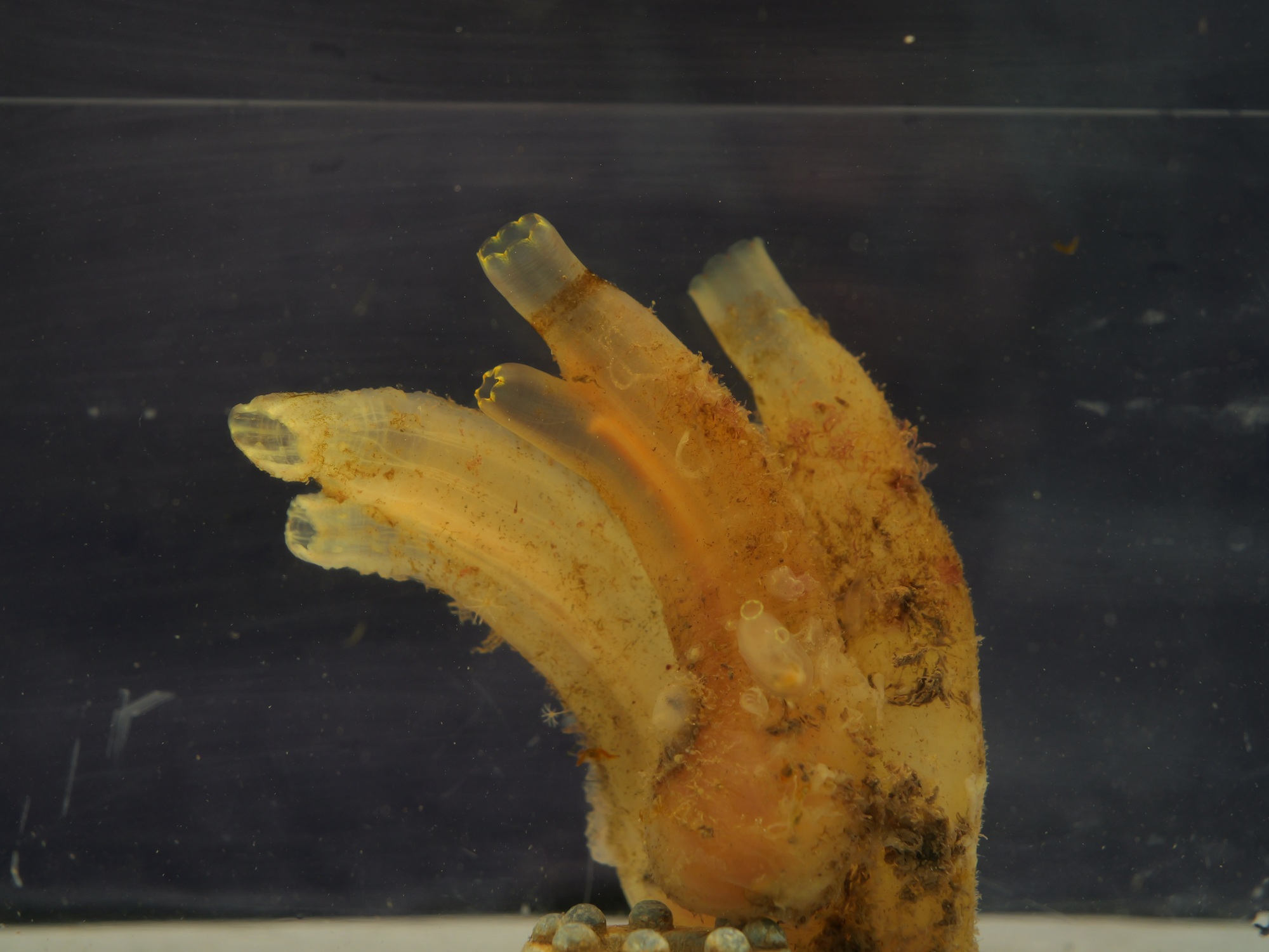
Tunicates, the closest invertebrate relatives of vertebrates, pass through a tadpole-like larval stage during development, which represents a simple model of chordates[1] with a propulsive tail composed of a notochord, a central nervous system, and segmented muscle blocks. The genome of Ciona intestinalis is very small (less than one-thirtieth of the size of the human genome), which facilitates molecular analysis at the genomic level.
The evolution of the vertebrate body parts that enabled mobility was driven by the stress of colonizing different environments
Previously, I found that thermal stress during development of the notochord and central nervous system impacts on the formation of the tail. More than a decade ago, comparative genomic studies revealed two sister species within Ciona intestinalis, and south-west England is one of very few regions worldwide where both species live together. My research showed that genes involved in the formation of notochord, central nervous system, and muscle interact with each other slightly differently between the two species, and that the two species react differently to thermal stress, giving rise to different degrees of impact on tail formation. My previous study also showed that maternal thermal stress during development impacts on the expression level of one of the important genes for notochord and central nervous system development in the offspring. If environmental stress has contributed to the evolution of the somatic animal, i.e. notochord, central nervous system, and segmented muscle blocks, as Romer suggested, we would expect to find similarities with how gene interactions involved in the formation of ‘somatic animal’ components are altered by current environmental stress in C. intestinalis, and exactly how such interactions differ between the two sister species. To test this hypothesis, in collaboration with colleagues at the MBA, I will undertake common-garden rearing2 of the two species with and without thermal stress during embryonic development.
Our planet has experienced several ice ages, as well as warmer climatic periods, throughout its geological history. My study will give insights into how such large-scale climate change may have impacted, and will again impact, vertebrate evolution, and will contribute to predicting future changes in morphology and disease susceptibility caused by climate change. •
Atsuko Sato Mem.MBA (sato.atsuko@ocha.ac.jp) Associate Professor at Ochanomizu University and Tohoku University, Japan.
This research is funded through a Ray Lankester Investigatorship, an award made possible by the generosity of our supporters.
Further reading
Romer, A. 1972. The vertebrate as a dual animal—somatic and visceral. Evolutionary Biology 6: 121-156. Sato, A., Kawashima, T., Fujie, M., Hughes, S., Satoh, N. and Shimeld, S.M. 2015. Molecular basis of canalization in an ascidian species complex adapted to different thermal conditions. Science Reports 5, 16717. doi.org/10.1038/ srep16717 Sato, A., Mihirogi, Y., Wood, C., Suzuki, Y., Truebano, T. and Bishop, J. 2024. Heterogeneity in maternal mRNAs within clutches of eggs in response to thermal stress during the embryonic stage. BMC Ecology and Evolution. 12;24(1) doi. org/10.1186/s12862-024-02203-8 2 A scientific method in which organisms from different experimental treatments are raised in the same controlled conditions.
[1] A chordate is an animal belonging to the phylum Chordata possessing the following features at some point in their development: pharyngeal slits, dorsal nerve chord, notochord, and post-anal tail. Humans and other vertebrates are chordates, as are some invertebrates, such as tunicates and amphioxus.