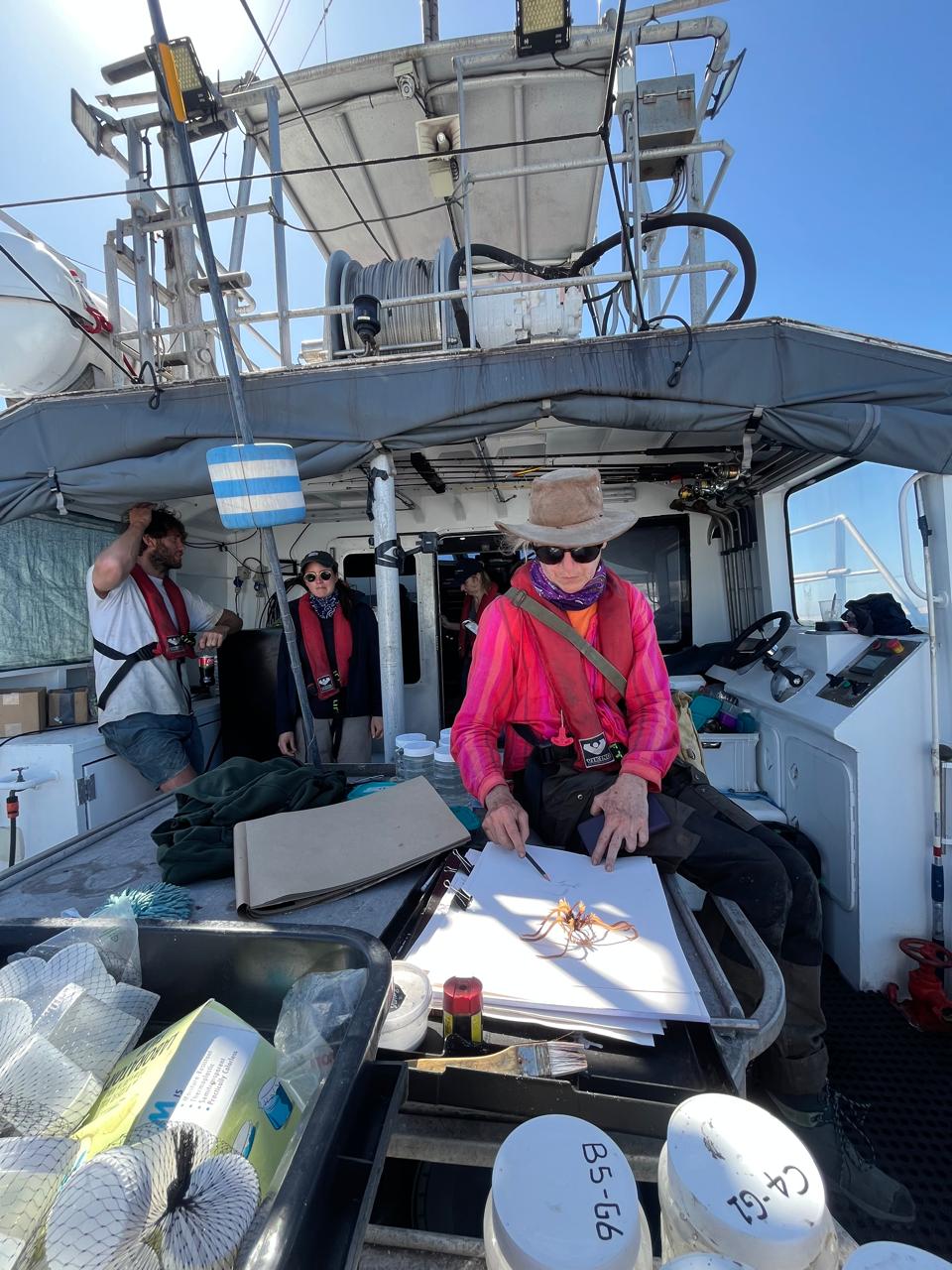
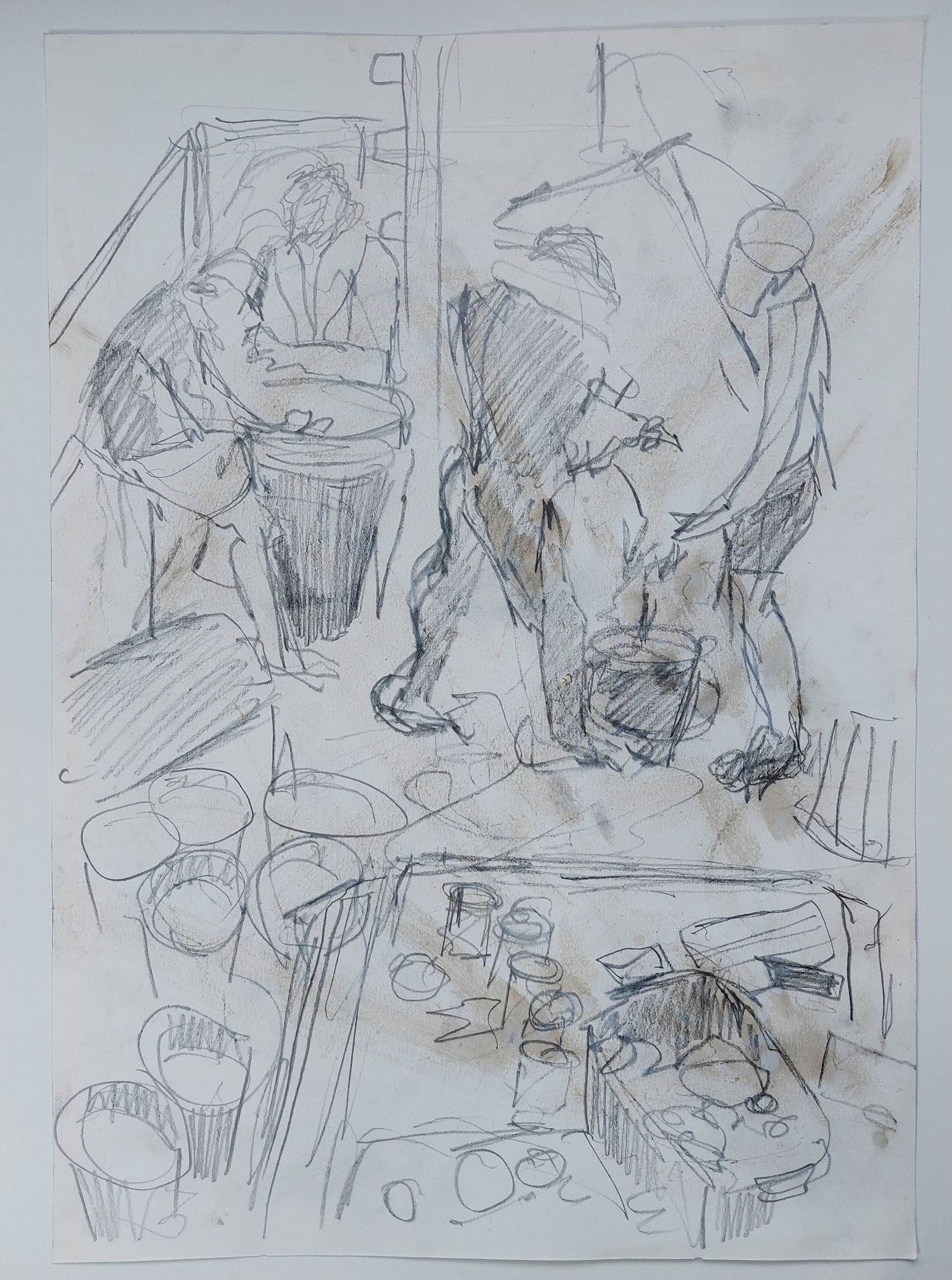
Perched on the corner of a metal table last used for gutting fish, paper wedged in the upturned lid of a plastic tackle box, I have brushes in both hands and a pencil gripped between my teeth. The vessel lurches and sways in a 3-metre swell, the wind keeps trying to rip the finished sketches out to sea, and the four scientists I’m trying to sketch are in almost constant motion, taking turns to manoeuvre the awkward metal machinery that resembles a small spacecraft as they collect seemingly endless samples and measurements from the bottom of the sea off South Africa.
I’ve been up since 4.30 a.m., woken by the stunning sunrise over the southern Indian ocean. The purple and orange light giving way to pink and pearl as I watched the waves rolling in, reminding me to take my anti-seasickness pill and eat a large breakfast in preparation for what might be a 16-hour day.
As artist in residence for the Convex Seascape Survey, I joined this field trip to witness and record the science and the scientists. By 7 a.m. we were on the research vessel Observer and leaving Gqeberha/Port Elizabeth; out past the fishing vessels, the yachts, the huge container ships being filled with manganese ore from the mines in the interior, past the giant cranes that load and unload cargo, and out to sea, eyes peeled for whales and dolphins. To our left, the vast golden sweep of the dunes of Algoa Bay, part of it now included in the Marine Protected Area of Addo Elephant National Park. To our right, the nearest landmass is Antarctica.
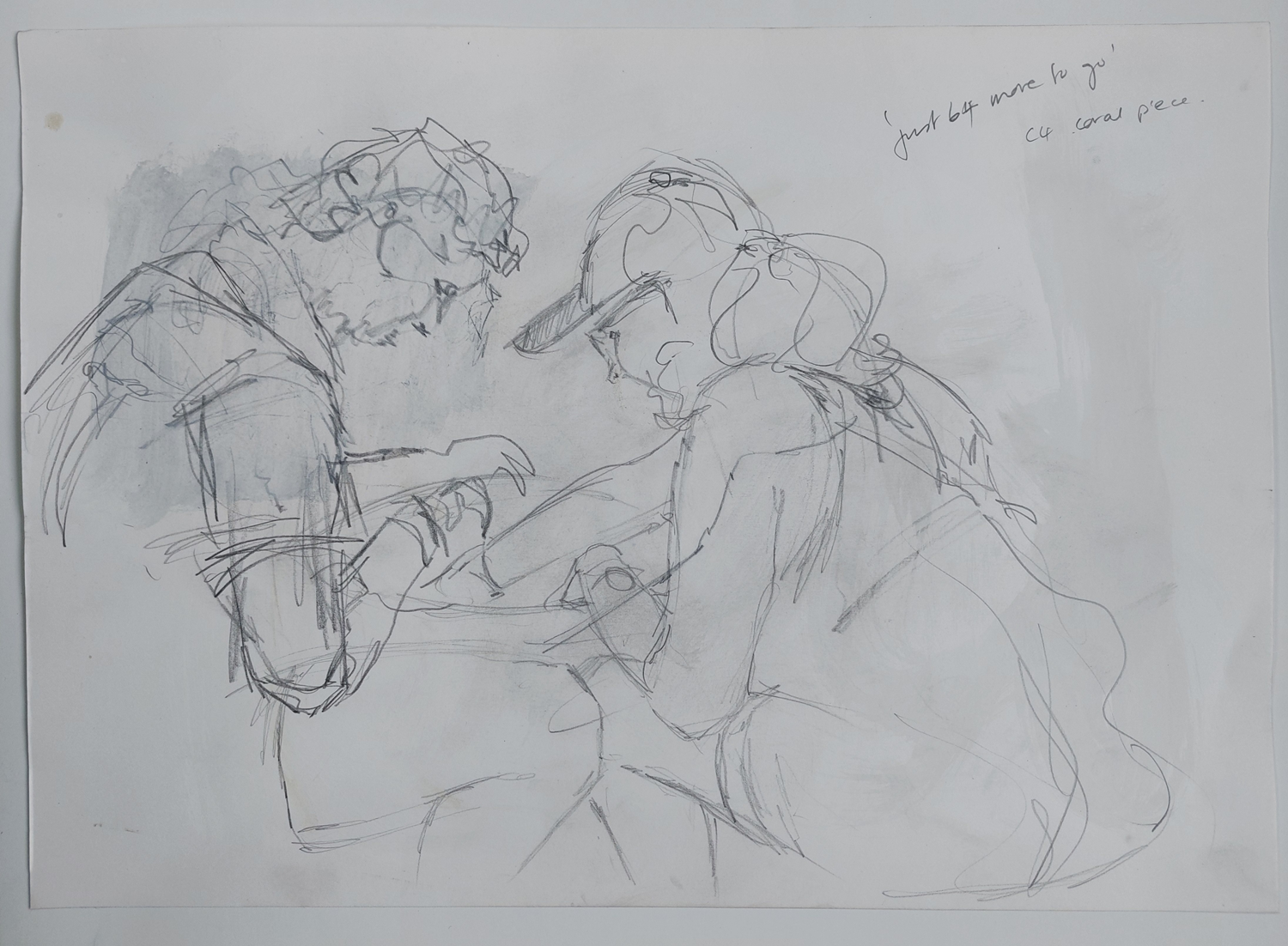
My sketch kit includes robust paper, compressed charcoal, graphite pencils, India ink (made from soot, and therefore also carbon-based), white chalk (calcium carbonate, like shells), and white casein paint—the milk-protein binder a nod to the cattle and dairy industry of South Africa, run-off from which ultimately finds itself in the ocean. Paints and inks are mixed with seawater from the bay. I try to use media relevant to each project: here we are looking at organic carbon stored in the sediment. Part of the process will include ‘ashing’, or burning samples to measure the sequestered carbon.
What I notice, after long days on board with the team, is not just how hard they work—how physically and mentally exhausting it is to conduct this work in hot, difficult conditions and think on your feet when things go wrong or break—but that each member of this team is almost interchangeable. As I try to draw them lifting the corer to replace the tube, I look up and they have all swapped positions. The arm that I drew straining to heft the metal is now someone else’s arm. I glance again and the whole machine has been swung out of the way, and another is replacing it on the davit winch. It is a whirling funfair ride of legs, arms, backs, and instruments, constantly being raised and lowered, opened and closed, and each team member is a cog in the system.
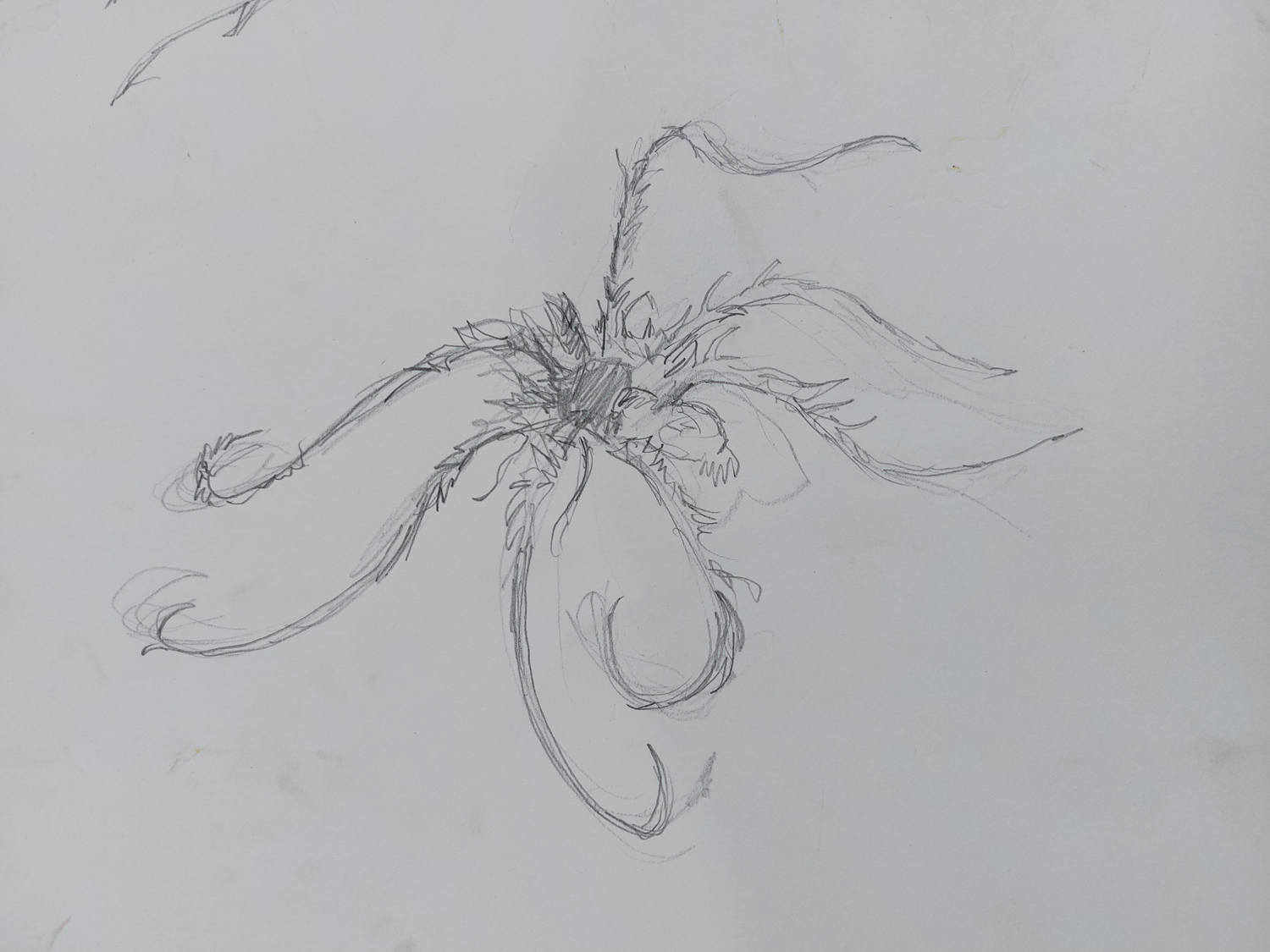
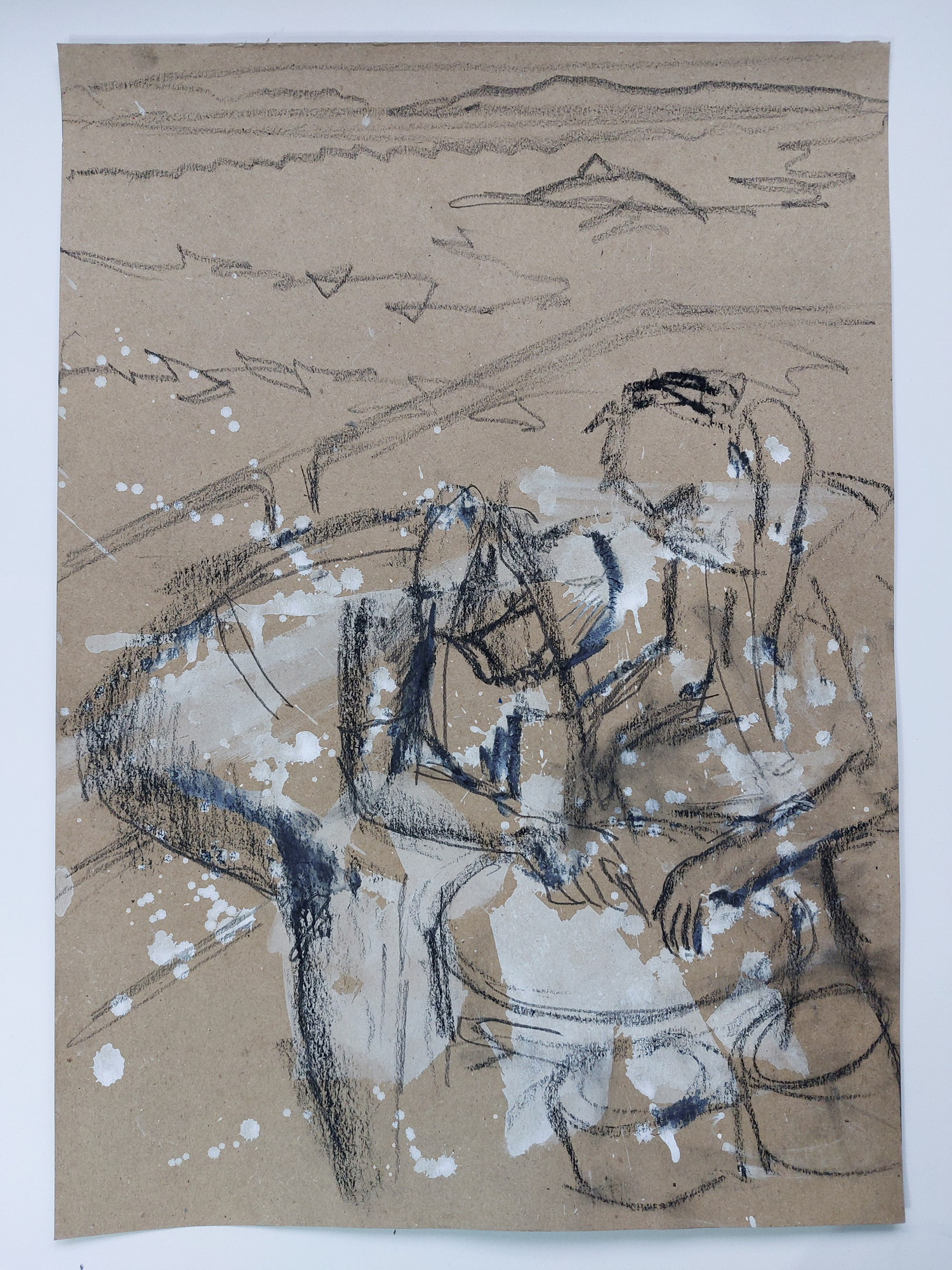
This goes on, over and over, for hours on end. It is mesmerizing. Yet, despite the gruelling physical strain, they are simultaneously taking precise measurements or observing tiny creatures with millimetre accuracy. All the clunky, weighty machinery contrasts with incredibly fine hand-eye coordination and delicate observation, touching care and respect for the animals, and unrelenting good humour. My sketches are fast and messy, but detailed and precise when I get the chance, hopefully conveying what it felt like to be on board.
I’ve worked with scientists and researchers for years on different projects. Just as art builds on the work of the past, these scientists are repeating and expanding on work that has been going on for centuries. Art and science are indivisible. Some people are better at understanding things through data, or the written word, some people work visually. We may look at questions from different angles, but we can all benefit from opening ourselves up to other ways of thinking; answers and insights can come from surprising places.
I hope my art can also help tell the stories behind the science. I believe that if people are able to see and share in how the data is collected—all the rigorous stages that it has to go through, and the absolute dedication of the scientists to making sure their research is correct—it may help counter a declining trust in science in some quarters, and help people to have faith in the results.
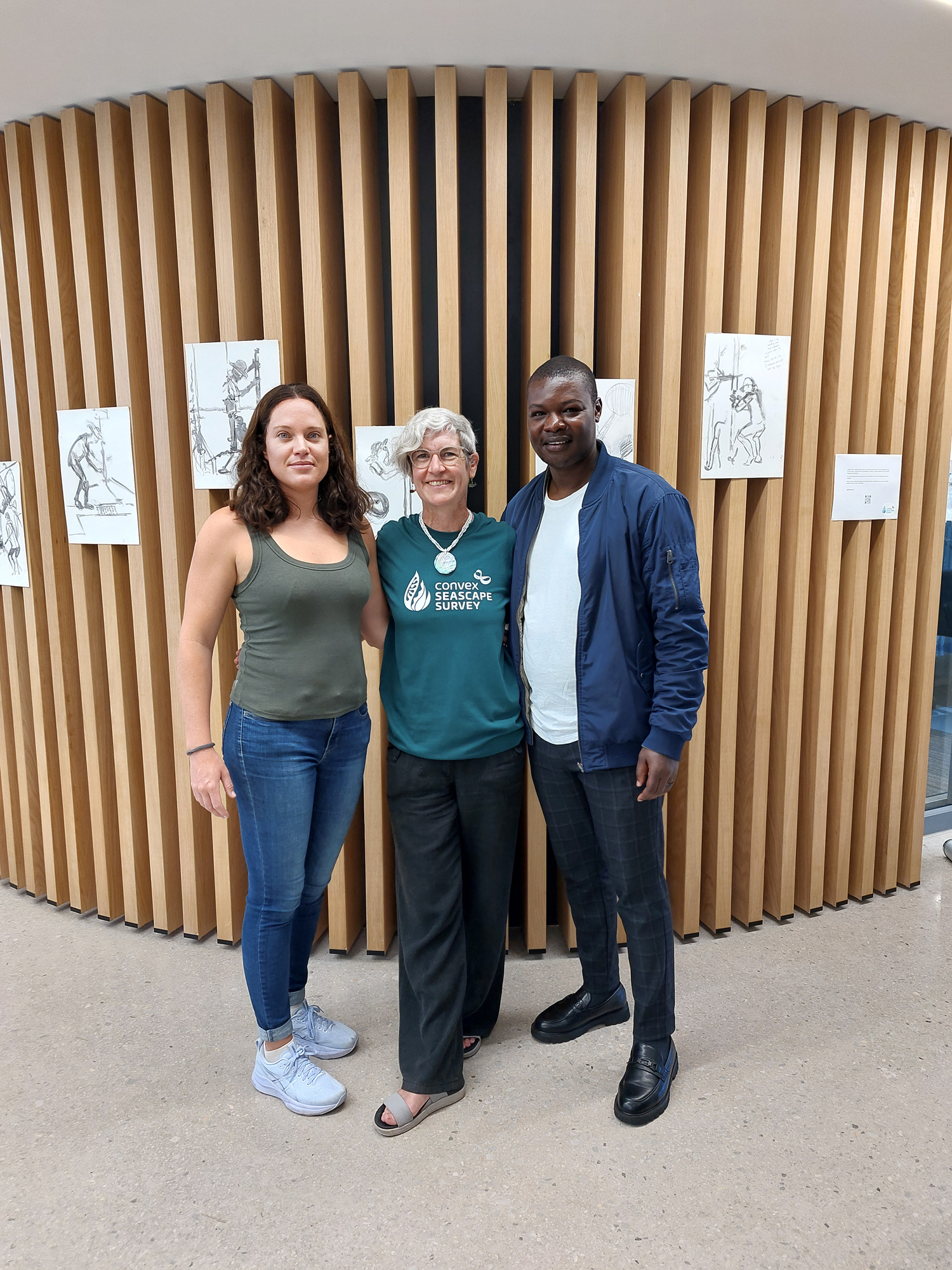
Back on land, the staff in the Institute for Coastal and Marine Research at Nelson Mandela University in Gqeberha/Port Elizabeth generously hosted and coordinated an exhibition allowing us to share the experience and the research. Over the last 4 years of working with the Convex Seascape Survey, we’ve had exhibitions, talks, workshops for all ages, and appeared in print and online. In one year, my artwork was seen by around 60,000 people.
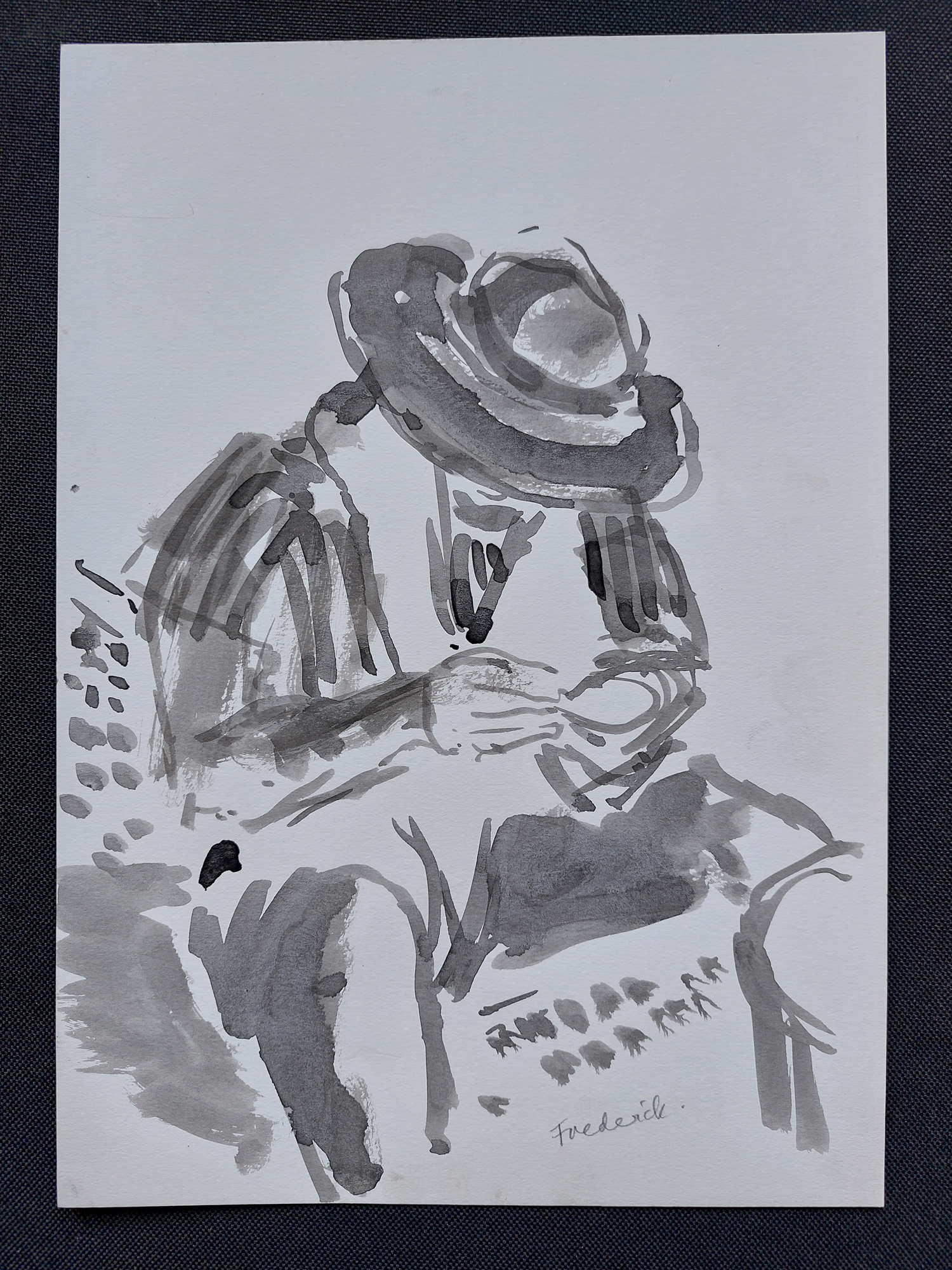
My work is often handmade and tangible, highlighting the fragility of the ‘world in our hands’. Low impact methods and materials not only minimize the carbon footprint of the artwork, but demonstrate the possibilities we have of making active choices in our lives to protect and conserve the ocean. Art is important for our minds and souls, but hopefully it can also help influence policy and shape people’s views on pressing issues such as climate change. It can reach across social divides, help us to recognize our shared humanity and our different but equally vital ways of looking at our world. This is the only one we have, and it is up to us to protect it and help it thrive.
• Naomi Hart (naomihart@yahoo.co.uk) naomi-hart.com
www.linkedin.com/in/naomi-hart-artist
convexseascapesurvey.com
The Convex Seascape Survey is a partnership between Blue Marine Foundation, the University of Exeter, and Convex Group Ltd. This pioneering collaboration of world-leading scientists is working to quantify and understand blue carbon stored in the coastal ocean floor and will deliver new, reliable, open-source data which will educate, inspire, and enable informed decisions on ocean use, to harness the power of the sea in the fight against climate change.