SHAPING THE ROAD TO RECOGNITION AND CHANGE
What are the priorities for inshore and small-scale fisheries in England? By Emily Bulled.
Sustainable fisheries provide many benefits to society, which are recognized and valued by the British public. They not only support food security and coastal employment, but often play a significant role in the cultural heritage and social fabric of seaside towns, as well as contributing to the environmental stewardship of marine areas. Despite these benefits, behind the big headlines, a quiet story is unravelling: the rapid decline of the UK inshore fishing fleet. New long-term analysis of Seafish data from Newcastle University reveals this trend, with acute loss amongst small-scale (under 10-metre) boats, and disparities that vary regionally, often with steep losses in rural areas.
Safeguarding a sustainable fleet that is diverse, resilient, rich in societal benefit, and widely distributed across our coastline, requires explicit and urgent action that is tailored towards the needs of our inshore fisheries and those who depend upon them. In autumn 2024, the Inshore and Small-Scale Fisheries (ISSF) Consortium led two workshops, in Poole and Whitby, to work towards addressing the loss of the inshore fleet. One hundred and twenty participants, including 53 fishermen, came together to try and understand the reasons behind these declines and identify solutions that were feasible to maintain thriving and sustainable fishing livelihoods. The discussions, over 3 days, identified many challenges, which were channelled into seven priority opportunities to be considered to secure inshore and small-scale fisheries in England.
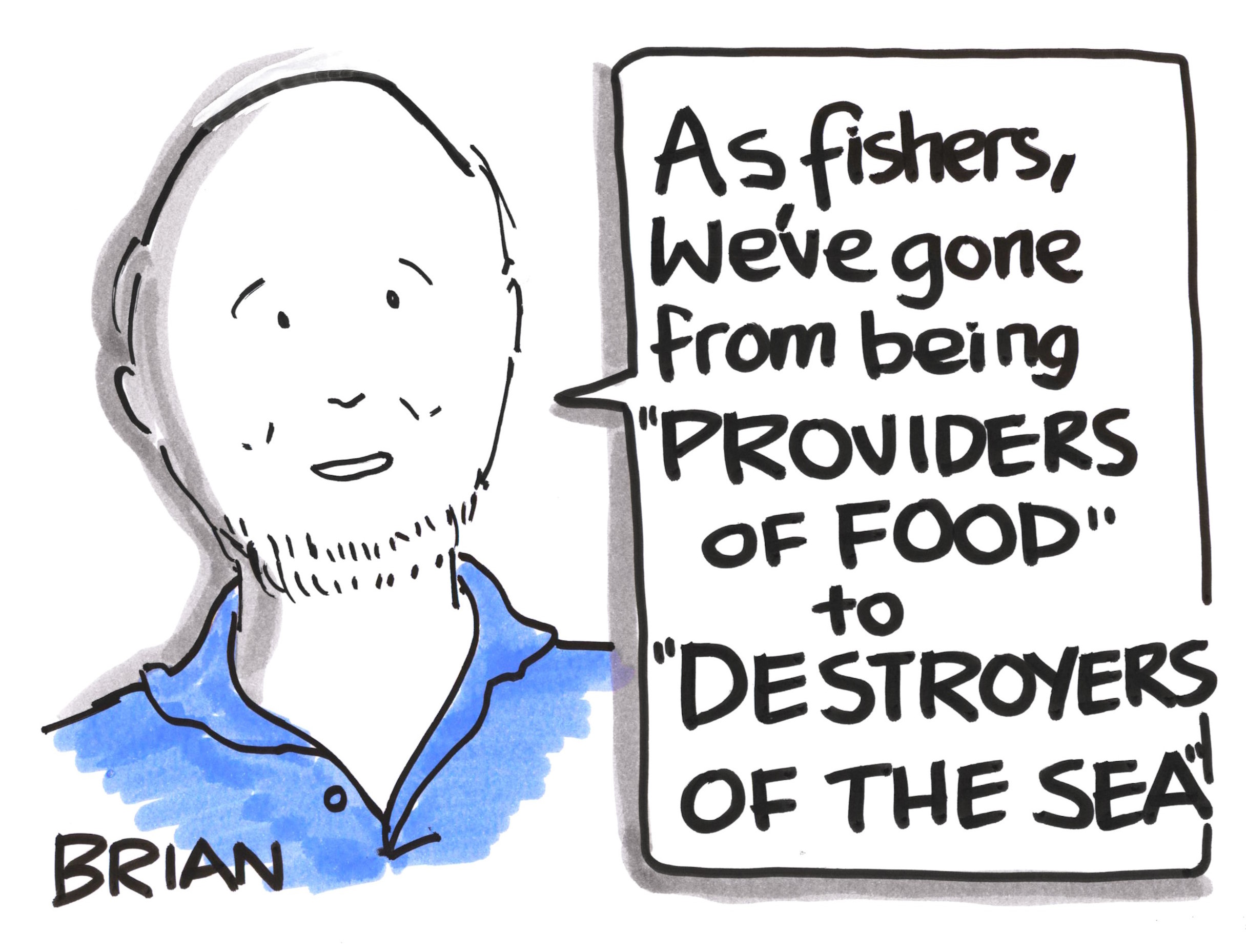
Enable the voices of inshore fishermen to be heard and build capacity to collectively act
The need for inshore and small-scale fishers to feel heard and to be able to contribute meaningfully to decision making was identified as the number one priority. Fishermen from the workshops felt they were not recognized as qualified to participate in discussions impacting their livelihoods. Even if they were able to input, they felt that decisions were being made for them rather than with them.
The conversations identified the need for small-scale inshore fishermen to come together and share their knowledge, expertise and experiences through a coordinated national representation. And for this national body to have a seat at the table when designing the solutions.
Effective regulation of all sea users
Discussions in Poole and Whitby identified a number of factors that were said to be threatening access to stocks and fishing grounds inshore. This included, but was not limited to, larger offshore and foreign vessels fishing in inshore waters, and competition with recreational fishers and wind farm developments. Small-scale fishers, especially, are heavily dependent on local waters; they cannot move further offshore in adverse weather due to safety considerations, limiting the space in which they can fish.
Many solutions were identified that could provide opportunities for change. Excluding larger foreign vessels from all areas within 12 nautical miles of the shore could reduce competition for the same space. Co-location of fishing in wind farm areas through co-design and appropriate consultation could also help, as well as providing fair compensation to fishers when construction does occur.
Health and safety regulations that match vessel type and size
In England, fishermen shared that recent health and safety regulations for small-scale vessels were very restrictive and didn’t consider the realities of an inshore fisherman’s working circumstances. This, coupled with the costs of complying with these regulations and loss of days at sea waiting for inspections, can significantly impact smaller vessels when days at sea are already limited by weather.
Fishermen expressed the need to be involved in the development of health and safety policies from the outset to ensure their feasibility. Financial support to purchase health and safety equipment would also be useful for smaller boats, with smaller businesses being impacted most by high compliance costs.
Better access to grants for small fishing businesses
Often, the online application processes for government grants to develop and support fishers’ businesses can be complex, or the applications require payments of costs upfront that then need to be claimed back. This is considerably more challenging for small-scale boats that work single-handedly, with only one crew member, or that lack land-based staff.

There is a need to better communicate the financial opportunities available, provide more support to fishermen with these applications, and simplify grant application processes so they can be more readily accessed.
Support for and facilitation of diversification
With a warming climate and changing stocks, the ability to diversify and adapt what they catch could not be more necessary for inshore and small-scale fishermen. Discussions in the workshops highlighted that fishing opportunities are bound by licensing regulations that are too restrictive, meaning that most small-scale fishermen are very limited when it comes to [RM3] what they can fish for. Vessel and gear modifications to allow fishermen to exploit different stocks are also often too expensive for small business owners.
The workshops identified the need for licence conditions to be more adaptable and flexible, to allow fishermen to quickly change their target species when a stock is doing well. Financial support for these vessel modifications could also ensure that fish resources can be exploited at sustainable levels more fairly.
Invest in training and recruitment into fishing careers
In England, fewer young fishers entering the industry is resulting in a rapidly ageing workforce. An increasingly challenging financial and regulatory environment means that fishing is no longer a viable livelihood for many. Young people can no longer go to sea until they are 18 (and require expensive health and safety qualifications), meaning that it is difficult for them to try out fishing.
Better availability of free or funded training, taster sessions, or apprenticeships could support youngsters to get into the industry. School sessions that educate people about fishing, or the provision of a minimum guaranteed wage to make the entry into the industry more viable, could also provide opportunities for change.
Improved public awareness and positive perception of the fishing industry
Inshore and small-scale fisheries contribute significantly to the national benefit, whether through coastal employment, local seafood supply, sustainability benefits, or cultural heritage. Today, these contributions can go unrecognized, and there is a need for increased public awareness and celebration of their importance. Fish festivals play a vital role in changing perspectives, and finding more ways to get the public to learn and understand the realities of fishing should be central to the solution.
Emily Bulled (emily.bulled@association-ifca.org.uk), Communication & Engagement Manager, Association of IFCAs.