This article is based on research published in the Journal of The Marine Biological Association.
When one thinks of Iceland, the first things that come to mind are its geological features such as glaciers and volcanoes. But on rocky shores, diverse intertidal communities thrive through the cold winters and mild sub-Arctic summers.
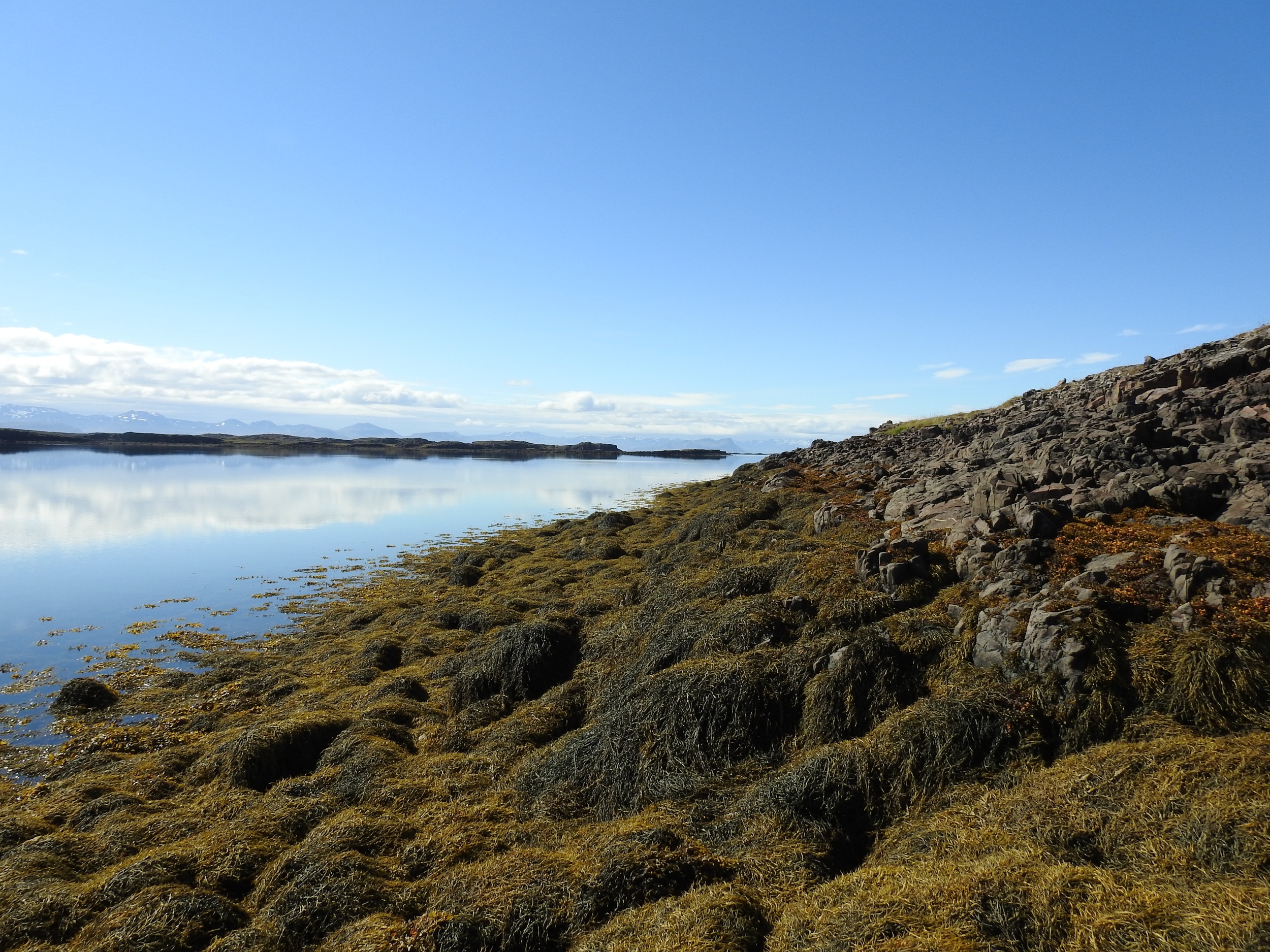
One of the long-term study areas in western Iceland, showing extensive knotted wrack stands along a sheltered fjord system. These sites encompass harvested and reference (unharvested) plots used to evaluate ecological impacts and regrowth dynamics.
Iceland has extensive rocky shorelines, with over half llocated in Breiðafjörður in the west of the country, where the spring tidal range reaches about 4 metres. These volcanic rocky shores are dominated by knotted wrack (Ascophyllum nodosum), a large, canopy- and habitat-forming fucoid seaweed. Abundant refuges, such as crevices, rockpools, and spaces beneath boulders and algae are habitat, feeding grounds, and nurseries for fish, crustaceans—from copepods to larger crabs including the invasive Cancer irroratus, and a myriad of epifaunal species (those that live on, or attached to, rocks and algae).
Ecosystem and resource
Large seaweeds have attracted interest from the earliest human settlers who found sustenance in them, to generations of scientists who have explored their ecological patterns. For almost 50 years, one company has been commercially harvesting knotted wrack, extracting up to 20 thousand tonnes of biomass per year from wild populations, which is estimated to be less than 2 per cent of the total biomass in Breiðafjörður. There is growing interest in knotted wrack harvesting in the area, with harvesting rates set at a maximum of 3 per cent of total biomass. Until recently, and despite a long harvesting history, how this extraction affected the processes and communities that live amongst the fronds had not been addressed.
Harvesting as a driver of change
Several studies out of Breiðafjörður have shed some light on the current trends on macrofauna in relation to harvesting, focusing on fish and decapod crabs. The effects of seaweed harvesting were minimal, although control plots had slightly higher fish diversity as well as larger cod individuals. However, trophic dynamics were altered, with a greater diversity of prey types retrieved from the stomachs of predators in harvested sites. The research found no significant effects on the community of shrimps, crabs, and lobsters, and current harvesting regimes did not affect the composition and abundance of the brachyuran (true crab) assemblage in the rocky intertidal zone.
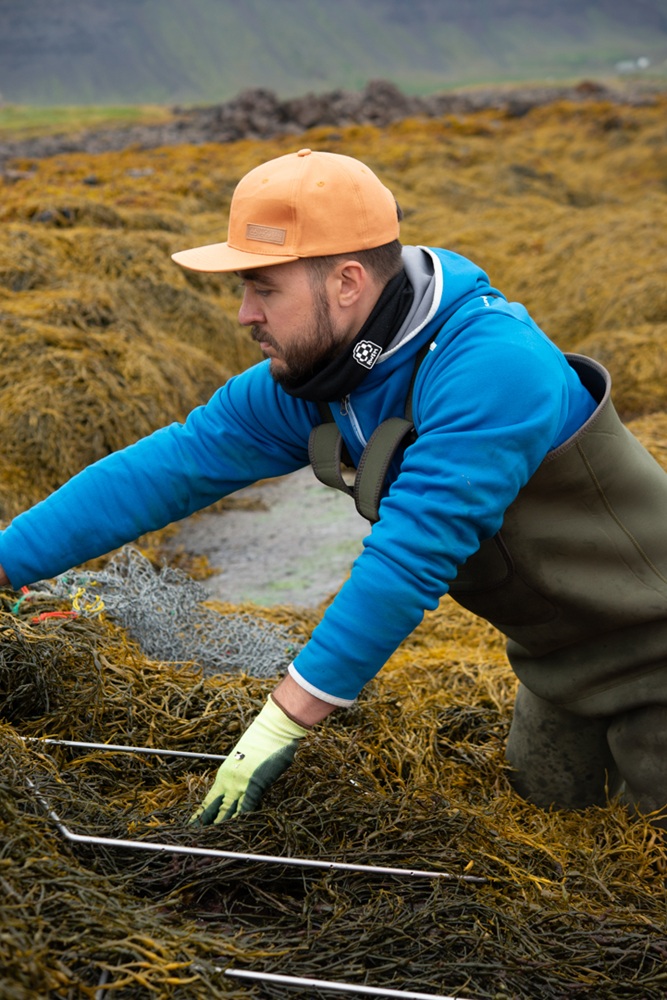
Several ongoing studies are investigating the broader ecological consequences of knotted wrack harvesting in Iceland. These include assessments of canopy regrowth and recovery following harvesting, the responses of algal communities beneath the canopy, and the effects on the animals on the algae and living within the underlying sediment. The results of these studies are currently in preparation, and are expected to be published in the coming years.
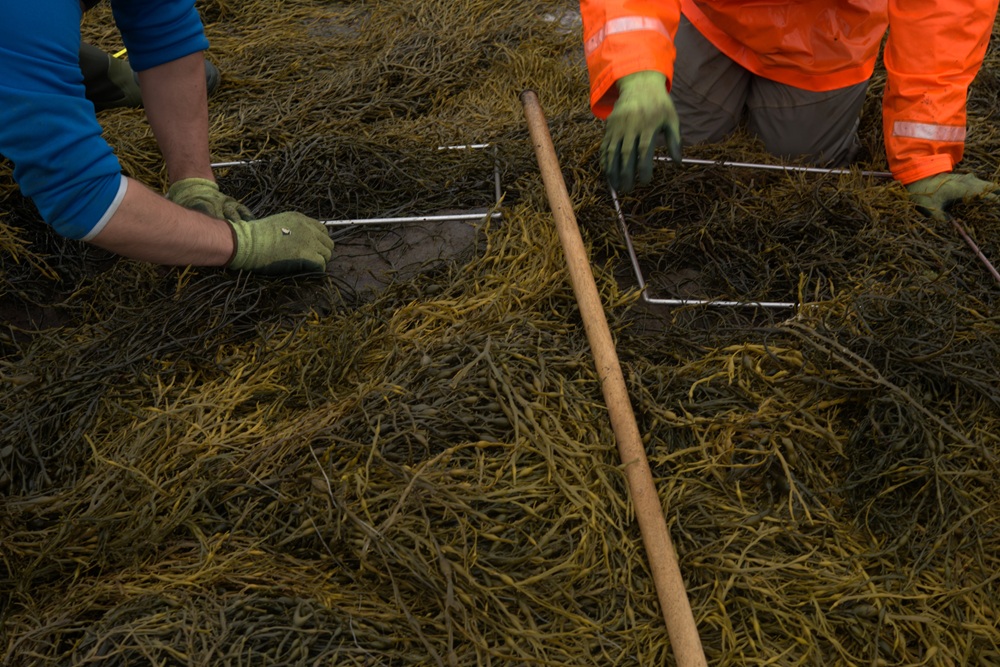
Researchers clearing all fronds within a defined quadrat to measure total wet biomass and maximum plant height. This sampling approach provides calibration data for long-term monitoring and improves estimates of standing stock.
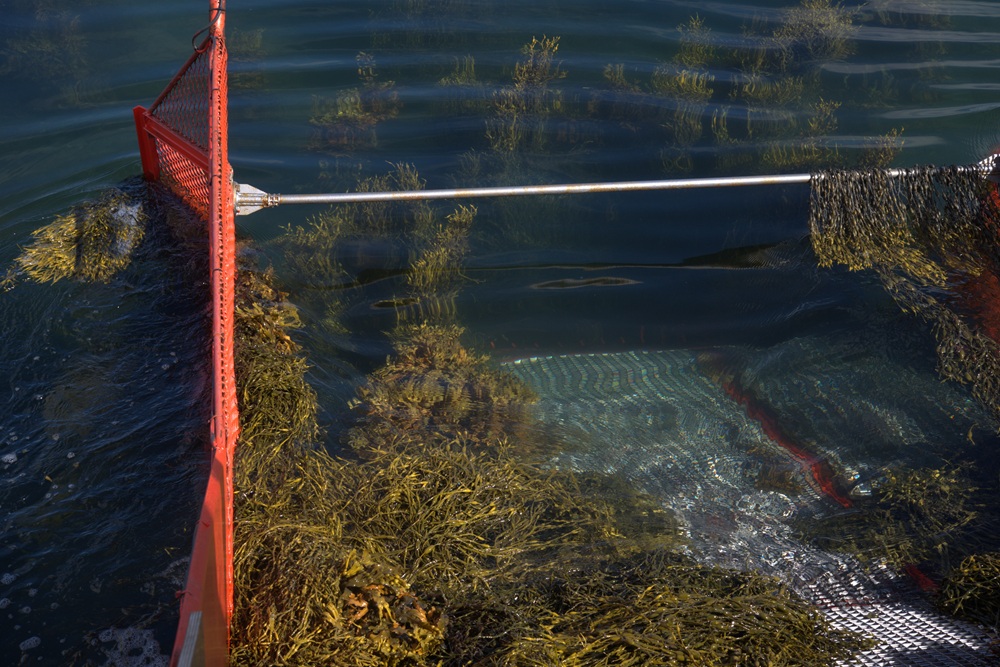
Commercial mechanical harvesting of knotted wrack conducted at high tide, when floating fronds are accessible to the boats. Harvesting follows regulated management guidelines designed to promote sustainability and maintain ecosystem function.
Harvesters and scientists collaborating
A key part of these efforts is close collaboration between scientists and commercial harvesters, whose local knowledge and long-term engagement with the resource are instrumental in refining monitoring approaches. This ensures that harvesting remains within sustainable limits while continuing to support a viable industry in these remote areas. The economic interests of the enterprise do not lie with mismanagement, and an insufficient recovery period would yield less material for the same effort and cost. Recently, a recovery period of at least 4 years was established in law in Iceland, matching the operator's optimal re-harvesting period and researchers’ observations and measurements of biomass recovery.
Closing thoughts
Knotted wrack beds are important as habitats and nursery grounds for crustaceans and commercially valuable fish. Their significance as a foundation species underscores the need for sustainable harvesting practices that maintain ecosystem health and protect juveniles that are especially susceptible to habitat degradation, should harvesting intensify.
- Jón Tómas Magnússon (jtm4@hi.is) and Lilja Gunnarsdóttir.
Further reading
Gunnarsson, K., Burgos J., Gunnarsdóttir L., et al. 2019. Ascophyllum nodosum in Breiðafjörður (Iceland), distribution and biomass (Klóþang í Breiðafirði, útbreiðsla og magn). Marine and Freshwater Research in Iceland, HV 2019-16.
Magnússon, J. T., Hawkins, S. J., Gunnarsdóttir, L., et al. 2024. Range extension of invasive Cancer irroratus and native Carcinus maenas polewards in the Ascophyllum-dominated intertidal zone in north-west Iceland. Journal of the Marine Biological Association of the United Kingdom, 104, e3.
Magnússon, J. T., Hawkins, S. J., Gunnarsdóttir, L., et al. 2025. Icelandic intertidal fish communities and effects of knotted wrack (Ascophyllum nodosum) harvesting. Journal of the Marine Biological Association of the United Kingdom, 105, e75.
Researchers clearing all fronds within a defined quadrat to measure total wet biomass and maximum plant height. This sampling approach provides calibration data for long-term monitoring and improves estimates of standing stock.
© Karl Gunnarsson.
Commercial mechanical harvesting of knotted wrack conducted at high tide, when floating fronds are accessible to the boats.
Harvesting follows regulated management guidelines designed to promote sustainability and maintain ecosystem function.
© Karl Gunnarsson.