Altered states: a change in the coastal ecosystems of the North-east Pacific
This article appeared in issue 12 (April 2019) of The Marine Biologist magazine.
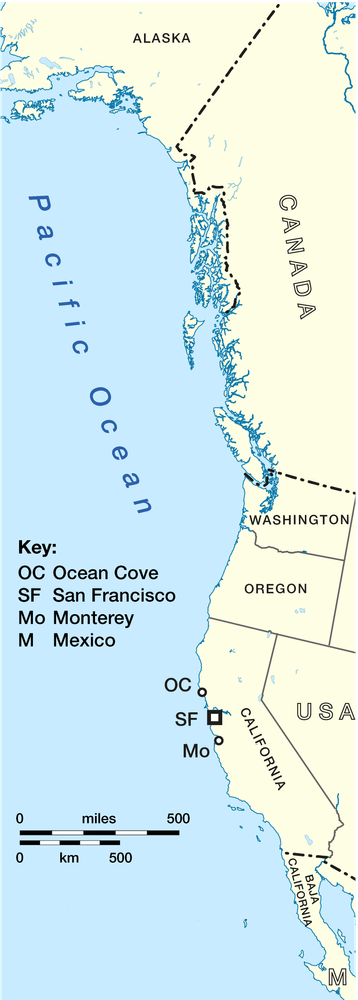
Kelp forests flourish in nutrient-rich temperate ecosystems around the world. On the west coast of North America, lush, productive kelp forests are found from Alaska to Baja California (Fig. 1). When under stress, these coastal ecosystems may shift to food-limited low-productivity urchin barrens. In northern California, an unprecedented and extreme version of this ecosystem shift has occurred. This has severely disrupted ecosystem services such as providing food and habitat supporting rich biodiversity and economically important fisheries, coastal protection from wave exposure, and carbon sequestration.
Trouble on the horizon
Dr Cynthia Catton is an Environmental Scientist with the California Department of Fish and Wildlife and is a lead on a programme that has surveyed the nearshore waters of northern California for 20 years. ‘In 2014 the canopy-forming kelp species that is the foundation of our kelp forests had declined dramatically. We had also started to see more small urchins than usual.’ Since those initial observations, Catton and many others have witnessed profound state changes in kelp forests in the North-east Pacific region.
Beyond urchin barrens
Multiple coinciding large-scale impacts have catalysed this extreme ecosystem response. The first was a widespread starfish mass mortality which depleted more than 20 starfish species from Alaska to Mexico, starting in 2013. Starfish are important predators of urchins and other shellfish species. In 2014, a series of consecutive years of warm water conditions started to impact northern California, due to a combination of an extreme marine heatwave (2014–15), popularly known as ‘the blob’, and a strong El Niño (2015–16). Normally, the northern California coast is supplied with nutrient-rich upwelling waters of 10–12°C. At temperatures above 12°C, nutrient levels are low in this region. At temperatures over 16°C, cold-loving species begin to show signs of warm water stress. Starting in 2014, nearshore subtidal water temperatures in the kelp forests regularly reached 14°C, and peaked at 18°C. The combination of nutrient limitation and thermal stress was a double whammy for northern California kelp species which contributed to the recruitment failure in 2014.
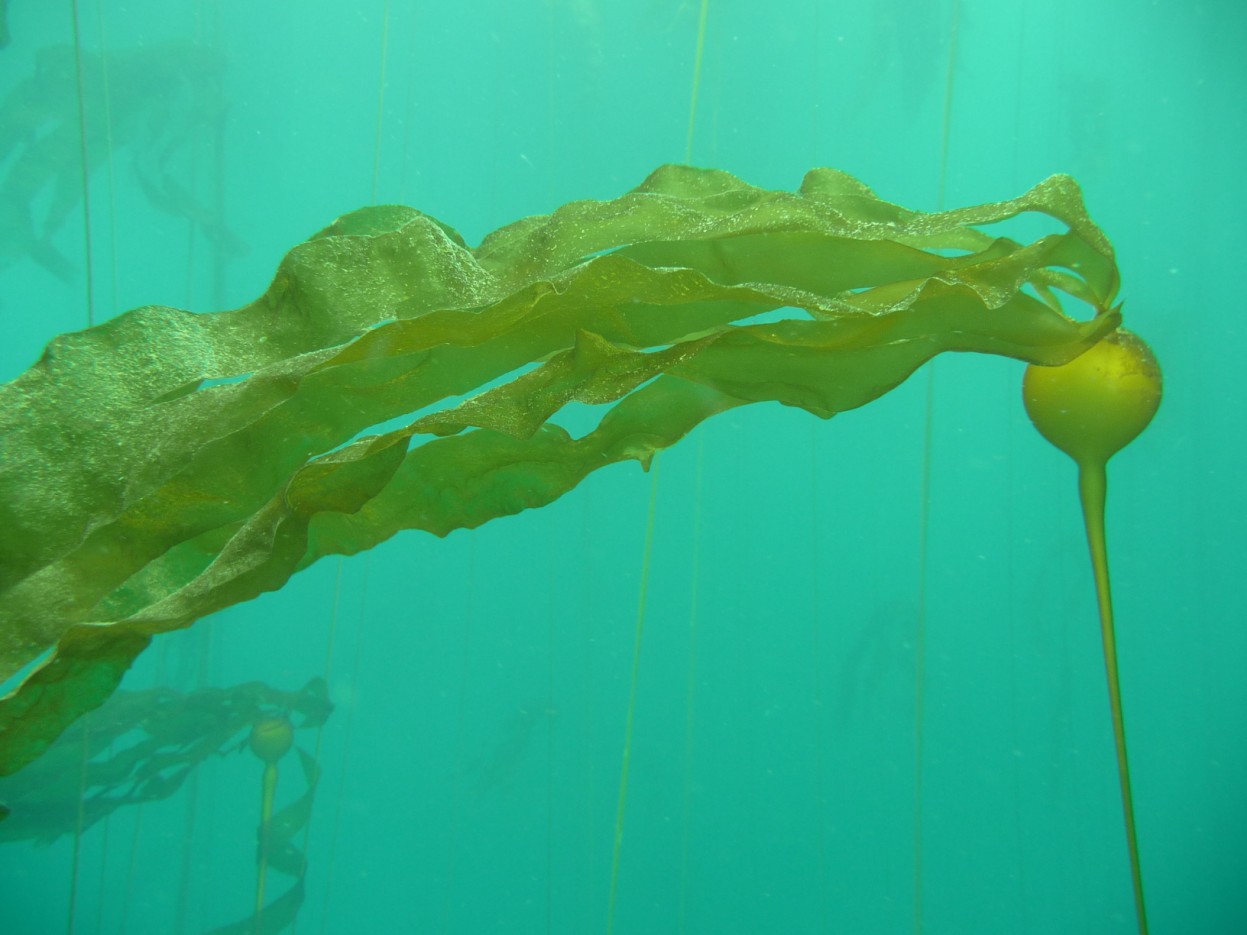
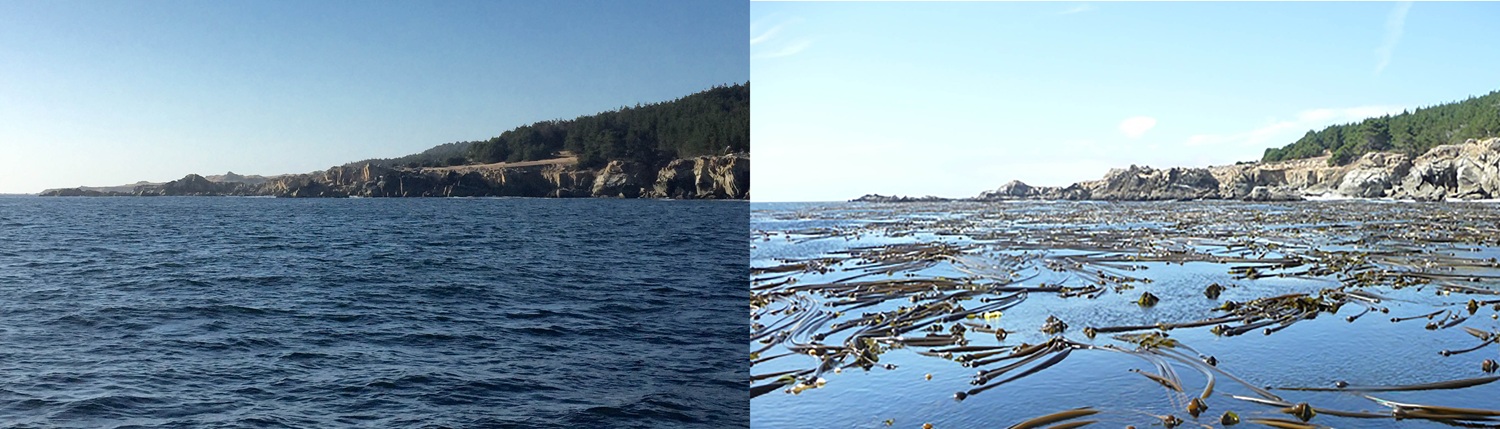
In 2014 there were widespread failures of bull kelp (Nereocystis luetkeana, Fig. 2) growth, resulting in more than a 90% loss of canopy area relative to previous years over about 250 km of the northern California coastline (Fig. 3). High variability of canopy growth from year to year is not uncommon, but persistent low canopy growth associated with high urchin numbers over multiple years is very unusual.
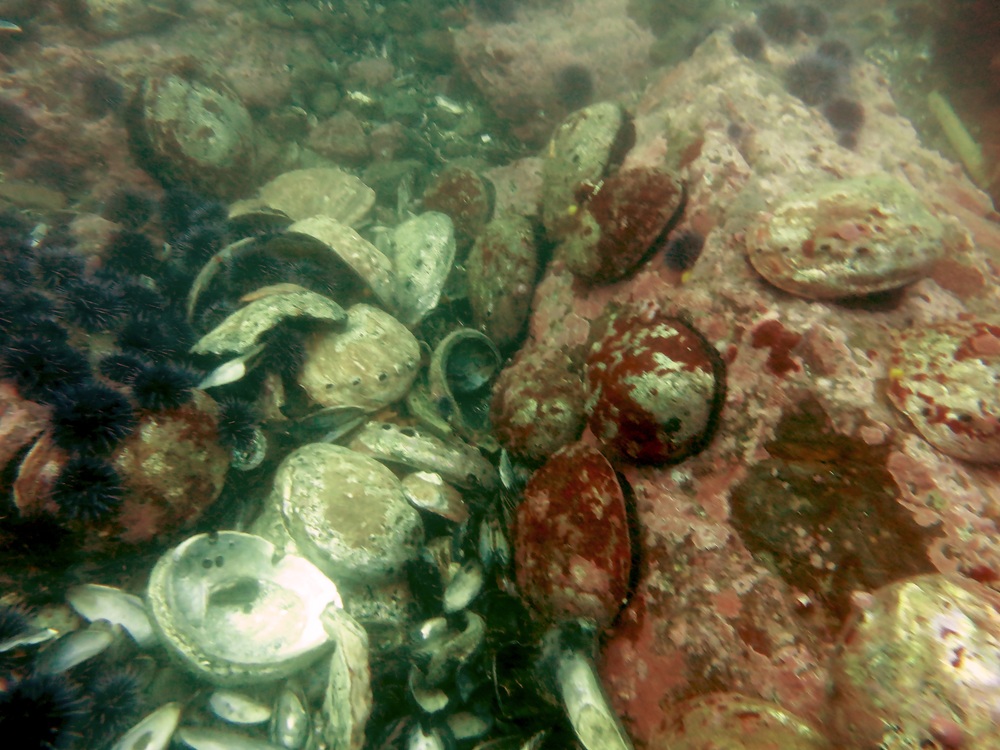
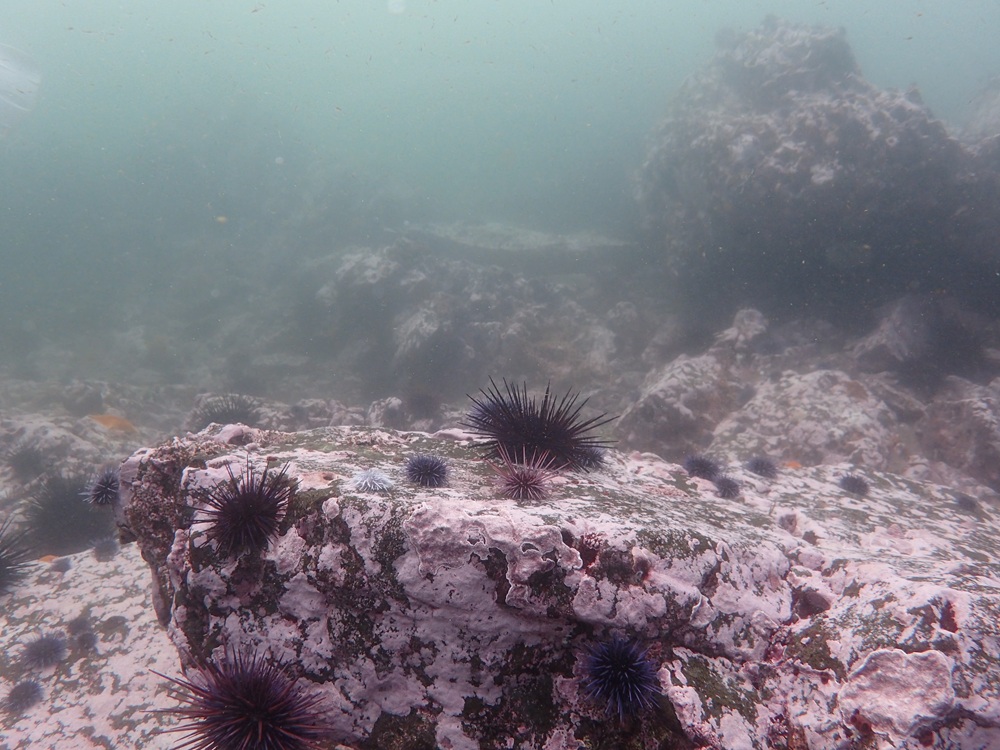
The failure of the canopy-forming algae had set the stage for competition for food among grazing invertebrates. In response, urchins emerged from nooks and crannies and formed ‘feeding fronts’. They also invested energy in bulking up their jaws, enabling them to feed on barnacles, sponges, and calcified, encrusting algae. In 2015 there was 60 times the number of purple urchins (Strongylocentrotus purpuratus) compared to the long-term average. The aggressive grazing pressure effectively maintained low food availability for other economically important grazers, particularly red urchins (Mesocentrotus franciscanus) and red abalone (Haliotis rufescens) (Figs 4 & 5).
‘In Northern California, seastars [starfish] were effectively wiped out in 2013 releasing many urchins from early life history predation,’ explains Catton, ‘so we started to see a lot of small urchins. Now we see large areas of reef that are bare rock; the system has progressed beyond what we typically think of as an urchin barren.’
Scientists came together late in 2018 to share reports of major urchin barrens from Baja California to Alaska. The bigger picture raised more questions than it answered; for example, the timing of starfish wasting in different locations followed no discernible pattern. In addition, each area responded differently, depending on local conditions. Off Monterey, just south of San Francisco, bull kelp and giant kelp (Macrocystis pyrifera) co-occur, and support healthy populations of sea otters. Despite continued sea otter predation, patchy urchin barrens have also formed in the Monterey area.
Effects on coastal communities in northern California
The consequences for fisheries and on coastal communities in northern California have been dire. The gonads (or roe) of the red urchin are sold as uni making it the target of one of California's most lucrative fisheries. Today, there are plenty of both red and purple urchins, but severe starvation conditions have limited gonad development so that many have no commercial value, and since 2015, fewer fishers have been active over time. In 2018, the culturally important recreational red abalone fishery was closed for the first time.
Meanwhile, coastal communities are exploring ways to adapt to the ‘new normal’, for example, developing aquaculture to exploit purple urchins, and applying the newly abundant urchin tests to the land as a soil improver.
The future: action or adaptation?
Are there management actions that can help recovery of these Pacific coastal ecosystems? The magnitude of impacts and uncertainties about what will happen next mean that, for now at least, scientists and managers are having to wait and see. The priority is to understand the fundamental ecology of the system at the local and regional scales, or as Catton puts it, ‘We need to understand how feedback between different stressors is affected by the common features and unique aspects of each area’. Scientists and managers across state and national borders are seeking support to bring together marine ecologists, oceanographers and population geneticists in order to establish a more systematic approach to these problems.
In northern California, the community has come together to find a positive path forward in the face of big changes and uncertainty.
- Dr Cynthia Catton (Cynthia.Catton@wildlife.ca.gov) is an environmental scientist with the California Department of Fish and Wildlife.
- Guy Baker Mem.MBA