To the casual observer, a rocky shore at low tide can appear remarkably constant and stable. To a marine ecologist, however, it is a sensitive biological recording station where the species present, and their relative abundance, can reveal how the marine climate is changing over years and decades.
For 25 years, the scientists behind the Marine Biodiversity and Climate Change project (MarClim) have been collecting this information in a structured way. Their approach is deliberately straightforward: revisit the same rocky shore sites annually, survey the same target species using standard methods, and compare modern observations with historical records.
The diversity of the British Isles’ marine environment
The UK and Ireland are located on a major marine biogeographic transition zone where warm temperate waters of the Lusitanian (southern) province meet the cool boreal waters of the Boreal-Atlantic (northern) province. This unique location, where the distribution of warm- and cool-water species overlap, creates a highly diverse marine environment. Many rocky intertidal species reach either their leading northern or trailing southern range edges in this region. These range limits are important areas where species can respond strongly to changes in environmental temperature, especially when populations are already living close to their physiological limits.
Organisms of rocky intertidal areas are especially useful for tracking climate-driven change, as their sedentary or sessile nature means that they must adapt to changing environmental conditions or die. Their distributions change through processes of competition, reproduction, and larval dispersal and settlement. Juvenile stages settle successfully where the climate remains, or has become, suitable for colonization, or fail to persist where it has become too hot.
The origins of MarClim
In the 1930s and 1950s, the French marine biologist Édouard Fischer-Piette mapped intertidal species on both sides of the English Channel. His work influenced British researchers including J.H. Orton, Dennis Crisp, and Alan Southward, who extended the surveys around Britain, Ireland, and the Channel coasts. Those early studies created something that later became invaluable: a pre-modern baseline. They recorded where species occurred before recent decades of accelerated climate warming, before many contemporary monitoring programmes existed, and before digital databases were routine. Some of the evidence survived in published papers, but much remained in field notebooks and institutional archives. By the late twentieth century, changes in research funding, laboratories, and personnel meant that most of this long-term research had slowed or stopped.
MarClim was established in 2001 to rescue, organize, and extend this evidence.1 Historical data were digitized and resurveys of historical sites began in 2002. The aim was not simply to produce a new species atlas: it was to build a repeatable time-series capable of detecting and tracking ecological change, testing whether apparent shifts were local anomalies or part of wider regional patterns, and providing information useful for conservation and policy.
More than 3,000 MarClim surveys have been completed, which, combined with historical data stretching back to the 1950s, makes MarClim the longest and most geographically extensive intertidal time-series globally. Each year around 100 sites are surveyed around England, Wales, and northern France (with biennial surveys of most of the Scottish coastline undertaken by Mike Burrows). Surveyors record a standard set of 87 species of macroalgae and invertebrates, including warm-water, cold-water, and invasive non-native species. The methods are designed to record both abundance and absence. Disappearances or arrivals may signal a genuine ecological shift, particularly if similar changes are observed across multiple shores.
Biological indicators
The broad pattern detected by MarClim is consistent with a warming marine climate, with our data showing some of the fastest climate-driven changes in any natural system across the past eight decades. We have recorded advances and retreats of species that are driving changes in the biodiversity, structure, and functioning of rocky shore communities.
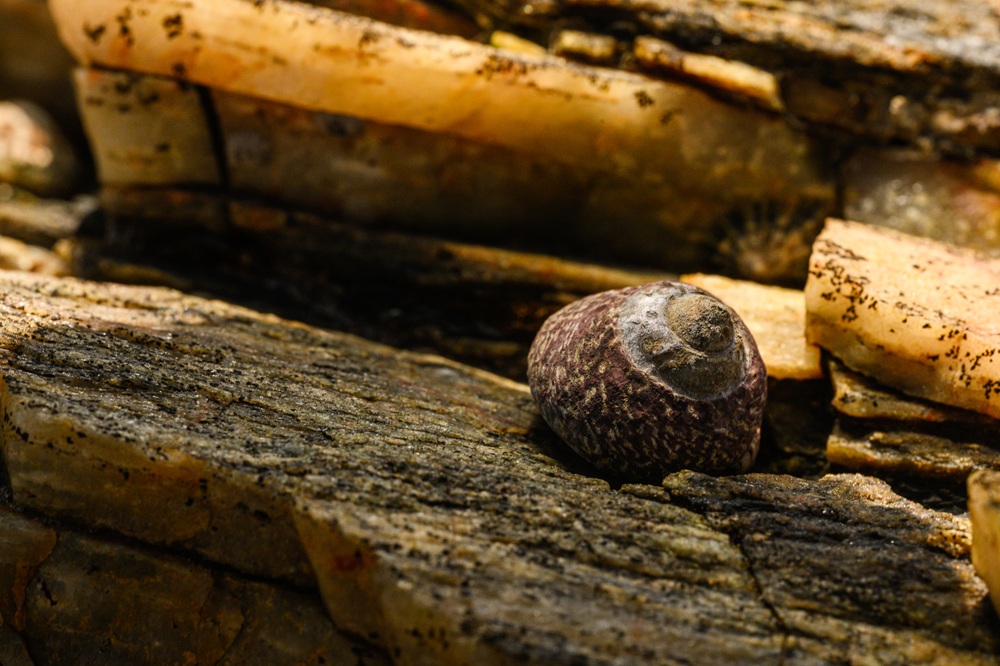
Warm-water gastropods provide some of the clearest examples. The topshell Phorcus lineatus and the limpet Patella depressa have shown expansion of leading range edges to more northerly and north-easterly locations in response to warming in UK regional seas. These animals are familiar to many shore naturalists, but in this context, they also act as biological indicators. Their presence, absence, and abundance help show how climate influences the distribution of intertidal life.
Cold-water species show the opposite pattern. The kelp Alaria esculenta and the barnacle Semibalanus balanoides are associated with cooler conditions and have shown contractions in the trailing range edges and declining abundances where warming reduces habitat suitability. 1 MarClim was established at the Marine Biological Association in 2001 as a joint project between the MBA, the Scottish Association for Marine Science (SAMS), and Plymouth Marine Laboratory (PML). It was co-led by Steve Hawkins (then MBA Director), Mike Burrows (SAMS), and Mike Kendall (PML), with much input from Alan Southward.
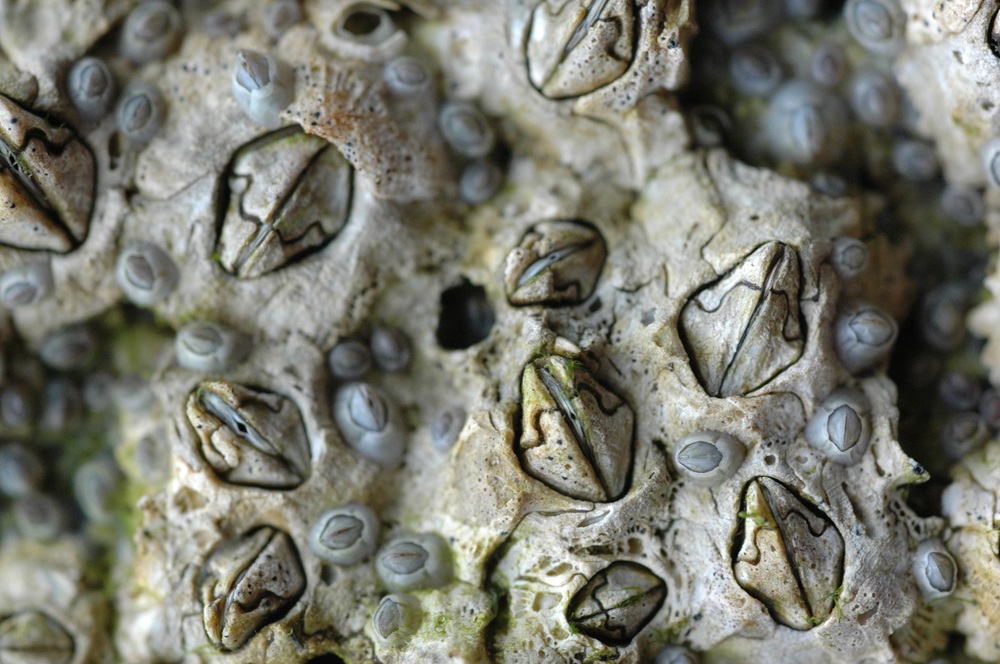
The result is not a simple northward slide of entire communities, but a reshuffling of ecological relationships on every shore
Does change matter?
Such changes matter because these species have structural and functional roles: barnacles determine available settlement space and provide food for other organisms; kelps create habitat structure and modify local conditions. Changes in their abundance can therefore alter the wider community.
One of the strengths of the MarClim dataset is that it shows communities are not shifting as a single entity. Species respond to warming (or cooling) at different rates and through different biological mechanisms. Some expand quickly when larval supply, local environmental, and hydrographic conditions allow. Others persist in local refuges. Some decline gradually, whilst others show sharper contractions or expansions of range margins. The result is not a simple northward slide of entire communities, but a reshuffling of ecological relationships on every shore.
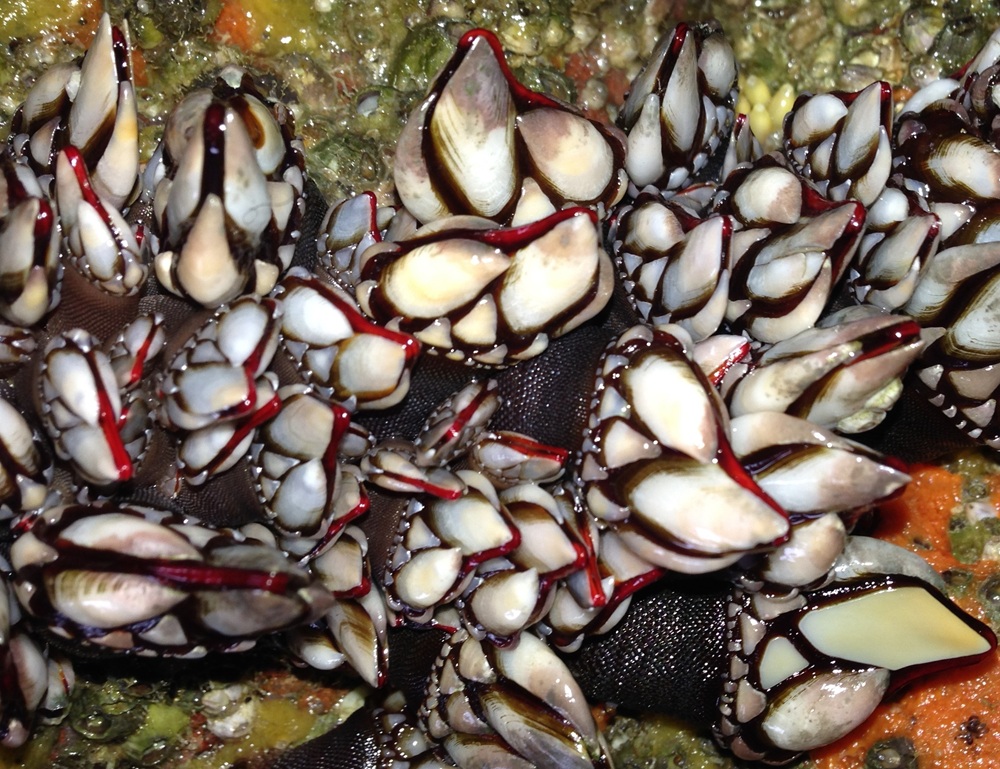
The invasive non-native barnacle Austrominius modestus, first recorded in Chichester Harbour in 1945, has now colonized much of the UK coastline. Its history is instructive because, as our data show, it is not a simple story of immediate displacement. In many places it has become established alongside native barnacles rather than eliminating them entirely. This kind of long-term evidence helps distinguish between arrival, establishment, spread, and ecological impact.
MarClim and citizen science: a natural symbiosis
MarClim reminds amateur naturalists that familiar shores are dynamic. A change in a limpet, a topshell, or a barnacle may seem small, but when the same change is recorded repeatedly across many sites it becomes part of a much larger signal. Field natural history and taxonomic skills remain central to our work: the ability to identify species accurately, recognize shore levels, revisit sites, and record observations consistently is what turns a rockpool ramble into scientific evidence.
Citizen science projects like Capturing Our Coast and The Rock Pool Project build on the MarClim time-series and protocols to expand data collection with quality assurance of data records carried out by expert taxonomists.
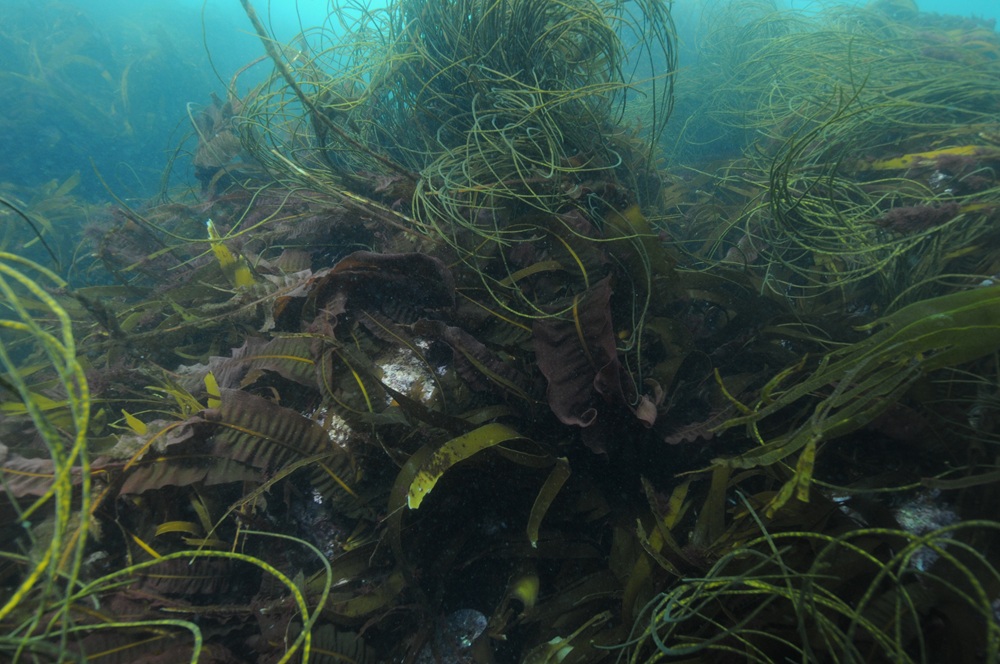
The warm-water hermit crab Clibanarius erythropus
St Piran’s crab was recorded in southwest Britain during the warmer period of the early 1950s, then disappeared in the 1980s. Its loss was probably linked to a combination of cooler conditions and the effects of tributyltin pollution on dog whelks, which reduced the supply of empty shells required by hermit crabs. After around half a century, this species has begun to reappear on UK shores. Its return illustrates how climate, pollution, larval dispersal, and species interactions can combine to determine whether a population can persist, and allows the tracking of leading-edge dynamics over time.
The value of MarClim
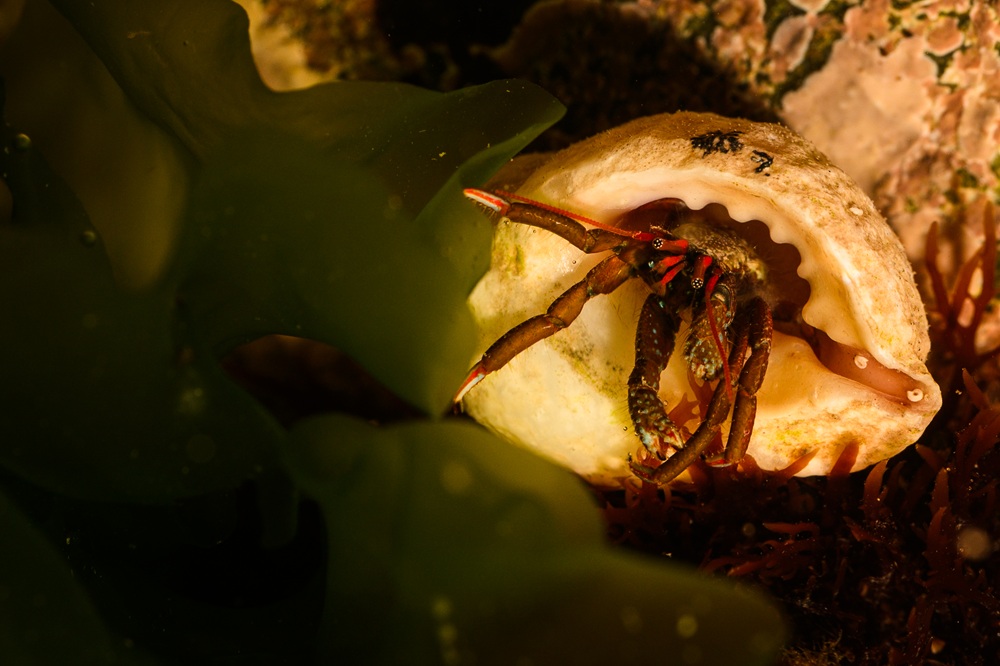
MarClim occupies an important space between academic research, environmental monitoring, management of protected areas, and natural history. It shows that climate change is not only a matter of future projections or distant ecosystems. It is already visible in the living margins of the British coastlines. The evidence is written in barnacle zones, whelk populations, macroalgal beds, and the reappearance of species once thought lost from particular shores.
For researchers and conservation bodies, the value lies in scale and continuity. A single survey can describe one shore at one moment. A standardized, multi-decadal dataset can estimate direction, rate, and variability of change. It can link local observations to wider patterns in sea temperature, planktonic communities, and regional climate, and help identify vulnerable species or habitats. Multiple decades of data allow generation and testing of climate forecast models that can accurately predict species-specific and community-level responses to climate change. Twenty-five years after MarClim began, and 80 years after the original surveys started, Nova Mieszkowska, Steve Hawkins, Mike Burrows, and Heather Sugden continue to record intertidal species and track long-term responses to climate change.
The rocky shore may look permanent, but it is a responsive ecological boundary between land and sea, cold and warm, past and future. By returning to the same sites year after year, MarClim has made that boundary measurable.•
Nova Mieszkowska1,2 Mem.MBA (nova@mba.ac.uk), MBA Senior Research Fellow and Professor Stephen J. Hawkins1,3 FMBA, Ray Lankester Research Fellow and Vice-President of the MBA. 1 Marine Biological Association. 2 School of Environmental Sciences, University of Liverpool. 3 School of Ocean and Earth Science, University of Southampton.
MarClim data and findings are both funded and used by the UK statutory nature conservation bodies Natural England, Natural Resources Wales, and NatureScot to track climate-driven changes to coastal biodiversity, and carry out Condition Assessments on Marine Protected Areas.
Further reading
Burrows, M.T., Hawkins, S.J., Moore, J.J., Adams, L., Sugden, H., Firth, L., Mieszkowska, N., 2020. Global-scale species distributions predict temperature-related changes in species composition of rocky shore communities in Britain. Global Change Biology, 26: 2093-2105. Crisp, D.J. & Southward, A.J., 1958. The distribution of intertidal organisms along the coasts of the English Channel. Journal of the Marine Biological Association of the United Kingdom, 37(1): 157-208. Fischer-Piette, E., 1936. Etudes sur la biogeographie intercotidale des deux rives de la Manche. Zoological Journal of the Linnean Society, 40(270): 181-272. doi:10.1111/j.1096-3642.1936.tb01683z.x. Mieszkowska, N., Hawkins, S.J., Burrows, M.T., Kendall, M.A., 2007. Long-term changes in the geographic distribution and population structures of Osilinus lineatus (Gastropoda: Trochidae) in Britain and Ireland. Journal of the Marine Biological Association of the United Kingdom, 87: 537-545. Southward, A.J., Hawkins, S.J. & Burrows, M.T., 1995. Seventy years’ observations of changes in distribution and abundance of zooplankton and intertidal organisms in the western English Channel in relation to rising sea temperature. Journal of Thermal Biology, 20(1-2): 127-155. doi:10.1016/0306-4565(94)00043-I.