When the ocean overheats
In the summer of 2011, the waters off Western Australia began warming. By February, they had reached the highest recorded temperatures since satellite records began in the early 1980s. Warm water was pushed south by unusually strong ocean currents, and for 10 weeks, sea temperatures sat at 2–4°C above normal. When the waters finally cooled, they took with them hundreds of kilometres of Ecklonia radiataQQQkelp forests that had stood for decades. Fifteen years later, this kelp forest has not come back. This warming event—which we now know as a marine heatwave—was not an isolated incident. Instead, it was a preview of what the rest of our global ocean is starting to experience.
Why marine species are vulnerable
All organisms have a temperature range they can tolerate. This is particularly relevant in the sea, where most species cannot moderate their own temperature and are instead dependent on the temperature of their environment. When temperatures increase to above those that an organism can tolerate, problems arise, including an increase in energy expenditure, failure to reproduce, and in extreme cases the consequences can be fatal. For a marine community, the impacts can be particularly bad when foundation species like kelp, coral, and seagrass are compromised. A kelp forest is not just a collection of large algae; it is a three-dimensional structure that provides shelter, feeding grounds, and nursery habitat for hundreds of other species. When the kelp dies, the entire community it supports is also at risk. While the destructive event from Western Australia is the starkest example we have, it certainly isn’t unique. In many areas globally, marine heatwaves have caused losses of coral reefs and seagrass beds, directly affecting the communities that depend on them.
BOX - What is a marine heatwave?
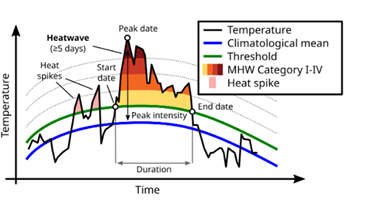
A marine heatwave has a precise definition: a period when seawater temperatures exceed a seasonally varying threshold (usually the 90th percentile) of historical conditions for that location and time of year, for at least 5 consecutive days. As background ocean temperatures rise, what was once a rare extreme has become progressively more normal, and the frequency of these events is increasing. Since the 1980s, marine heatwaves have become more than 50 per cent more frequent globally, and they are lasting longer and reaching higher intensities. The oceans have absorbed over 90 per cent of the excess heat from anthropogenic warming and the impacts of this are becoming increasingly clear. For more information, see: www.marineheatwaves.org
What do we lose when ecosystems collapse?
For as long as we have lived near coastlines, humanity has been dependent on marine ecosystems. In addition to providing food, ecosystems like coral reefs and seagrass meadows absorb wave energy, acting as natural buffers from storms. And for many island and coastal nations, the sea provides a (largely free) tourism industry. Marine heatwaves can affect all of these ecosystem services and more. For example, in 2023, the Peruvian anchovy fishery was closed when a marine heatwave caused the fish to move offshore, losing the commercial fishing industry an estimated US$1.4 billion. In the same year, Typhoon Doksuri (which was fuelled by a marine heatwave) hit China, Taiwan, the Philippines, and Vietnam. The severe weather impacted more than 2 million people and caused around 200 deaths. There are also many ‘hidden’ ecosystem services that can be negatively affected by marine heatwaves. For example, seagrass beds offer services like storing carbon and providing nursery grounds for fisheries species. As well as the destruction of kelp forest, the 2011 marine heatwave off Western Australia caused the world’s largest loss of seagrass meadow in an area called Shark Bay. This loss, which persisted for multiple years, was estimated to cost US$3.1 billion in hidden ecosystem services each year.
What is the biggest marine heatwave the world has experienced?
The biggest and best-known marine heatwave affected the north-east Pacific Ocean persistently for around 2 years between 2014 and 2016. This event, which became known as ‘the blob’, caused impacts including mass mortalities of California sea lions, seals, seabirds, and marine invertebrates, diseases that led to losses of marine species, harmful algal blooms, fisheries closures, coral bleaching, and loss of kelp forests. Since the original ‘blob’, multiple other major marine heatwaves have impacted this area, making warm waters the ‘new normal’ for the north-east Pacific.
Is it all bad news?
The increase of marine heatwaves paints a bleak picture, but it would be wrong to suggest that the news is all bad. In some countries, fisheries have adapted by changing their target catch species or putting quotas in place to reduce impacts, and tourism industries have taken advantage of warmer water species occurring in greater numbers. Where plants like kelp and seagrass are living at the colder end of the temperature range they can tolerate, marine heatwaves can cause an increase in growth. And for some species (e.g. some corals), thermally tolerant individuals have been found, offering hope that populations can become more resilient to warm waters over time.
What can we do?
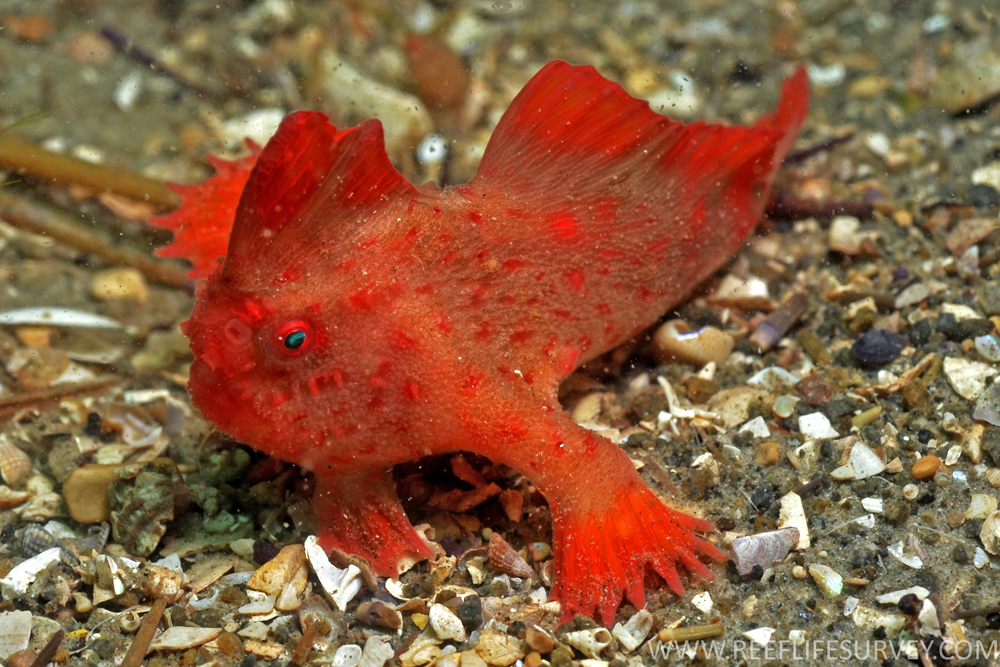
Unfortunately, humanity has set the cogs turning on climate change. We can’t go backwards, but we can start applying the brakes: we need to reduce our use of fossil fuels to cut greenhouse gas emissions. There is evidence to suggest that giving our ocean ‘breathing space’ will allow ecosystems to adapt to some degree. There are specific measures that can help reduce the direct impacts of marine heatwaves. Management strategies such as putting fishing quotas in place, reducing the length of fishing seasons or closing coral reefs to diving for periods of time are helping to reduce direct damage. Some endangered species—like the red handfish in Tasmania (see picture above)— are being collected and put into captivity for the duration of marine heatwaves to help protect them. From a scientific perspective, we are slowly getting an idea of which systems are most vulnerable, what drives resilience, and how we can adapt to help protect the ecosystem services our ocean provides. Marine heatwave forecasts are improving, enabling society to ‘think ahead’ and plan for the next event, reducing impacts before they occur. The multiple impacts of marine heatwaves that we have seen already are a reminder of what we stand to lose. By using the knowledge that we have already gained and building on it, we still have the ability to make a difference.
• Dr Kathryn Smith (katsmi@mba.ac.uk)