IN PRAISE OF SEAFOOD FESTIVALS
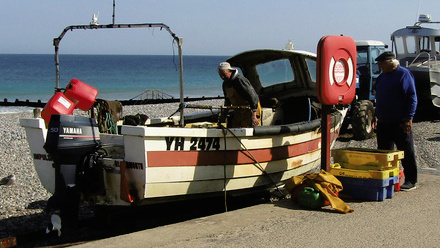
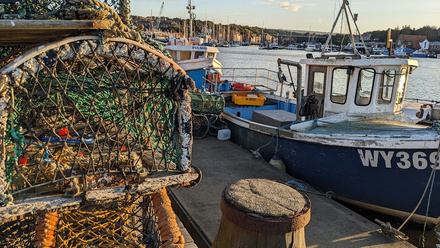
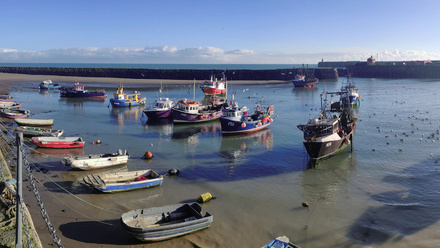
Local commercial fisheries are often touted as the ‘life blood’ of coastal communities. They are deeply valued by people who live, work in, or visit coastal towns, forming an important part of coastal life and tourist experience (see article on page 18). However, the nature of coastal towns is changing in ways that can sometimes obscure the contribution that an active fishery can make to people and place. Fewer boats in harbours, more recreational uses of the marine space, restricted public access to busy and multi-use ports, and the influx of second homeowners resulting in high visitor-to-resident ratios, risk a disconnection between people and the sea. Renewed effort is needed if fishing is to remain at the heart of coastal living, as a flourishing and contributing sector.
Celebrating local fisheries
Aligning coastal tourism with fishing heritage and culture maximizes the opportunities an active fishery can offer[1]. A compelling example is the Whitby Lobster Hatchery and Marine Discovery Centre (see article on page 19), which enables visitors to see and experience the town’s fishery and its sustainability and heritage. Another vehicle that serves to connect people with the sea, via fisheries and the seafood they produce, is fishing and seafood festivals. Globally, there are many examples of well-planned festivals that are clearly connected to the local fishery and its products, from bluefin tuna festivals in Taiwan[2] to celebrating the mussel in Denmark.
This summer, the Inshore and Small-Scale Fisheries (ISSF) consortium was active in seafood festivals throughout England, supported by the ‘Pride in the Seas II’ national portrait exhibition. Curated by researchers at Newcastle University, the large, striking images of fishermen with their boats attracted hundreds of people as part of festivals in Whitby, North Shields, Cromer, and Hastings. Here, the public could talk with fishermen directly and learn about the nature of fishing these days and some of the challenges faced.
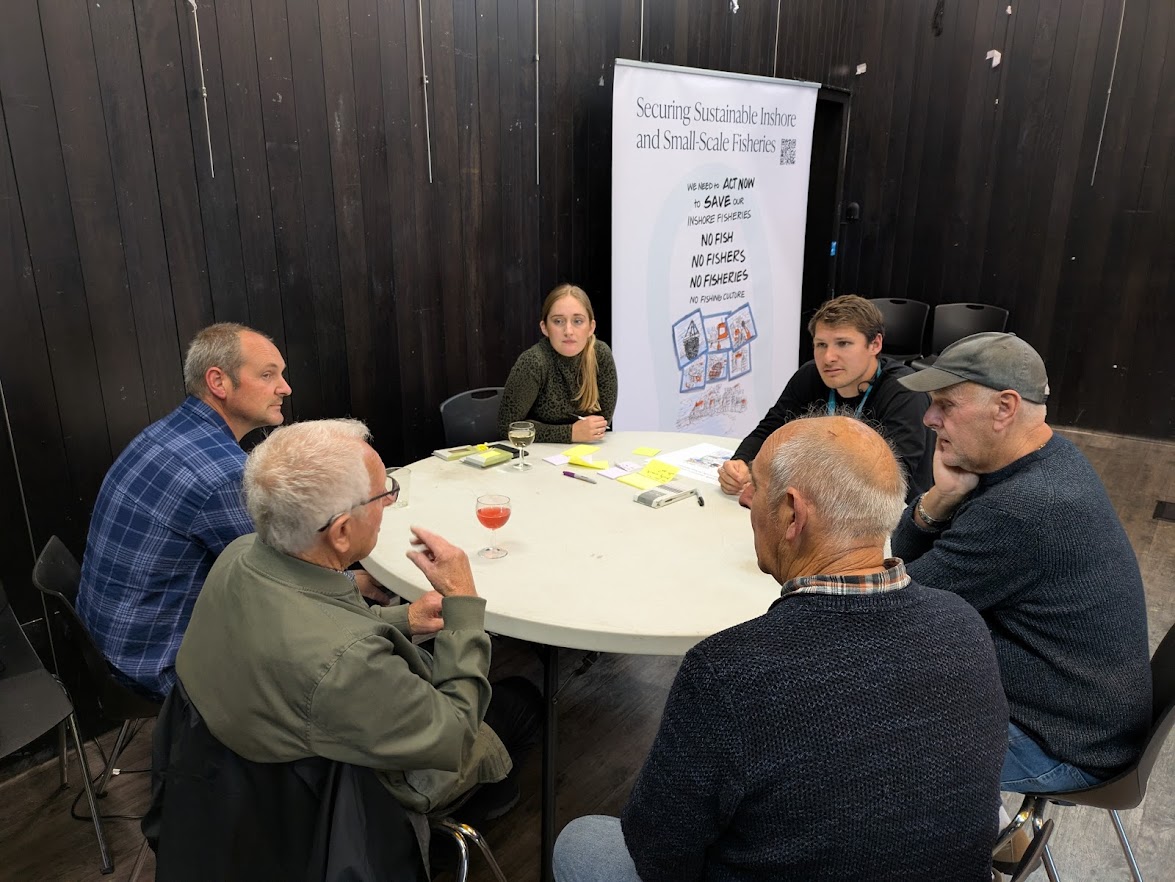
Local Hastings fishermen discuss challenges and solutions with members of the ISSF consortium. Concerns included the lack of fish and pressure from larger boats fishing offshore, seal depredation (eating catch and damaging nets), and health and safety rules poorly matching the reality of small fishing businesses.
Far more than just an income Fishing is a cherished way of life that is passed down from one generation to the next. But across the UK, the number of active fishermen has more than halved since the 1970s, and with the average age of a fisherman now at 44, the future of the industry rests on finding ways to support those still at sea while encouraging new entrants.
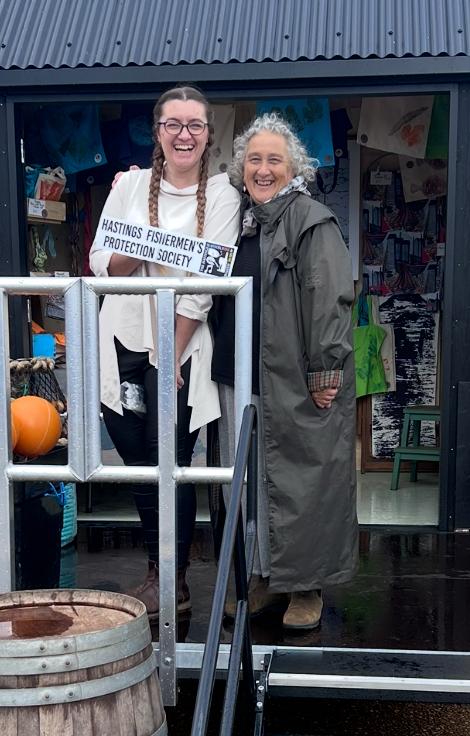
Yasmin Ornsby and Clemency Collins run a stall selling merchandise for the Hastings Fishermen’s Protection Society, which supports local fishing families. © ISSF.
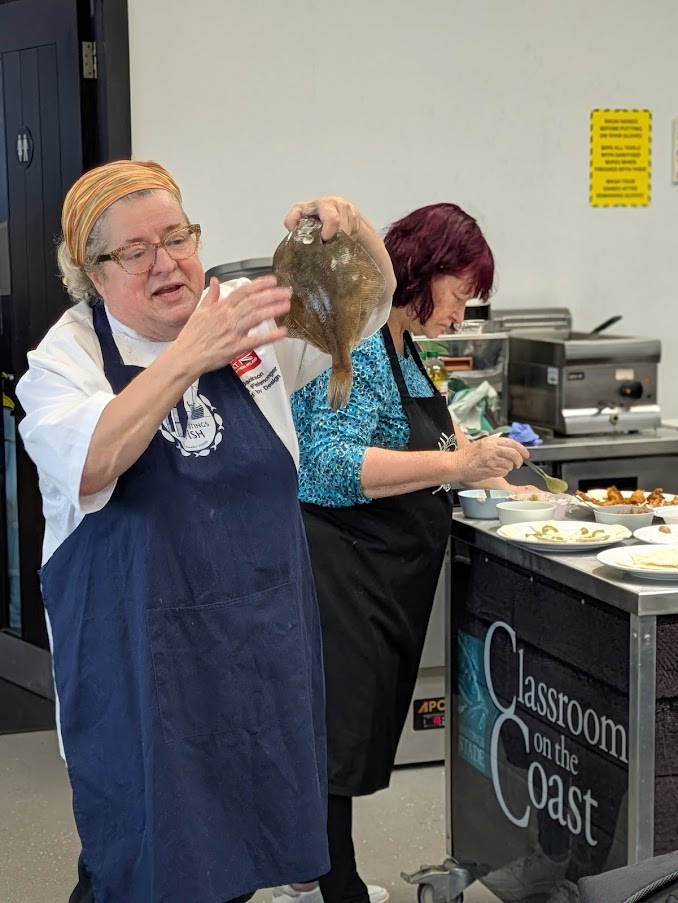
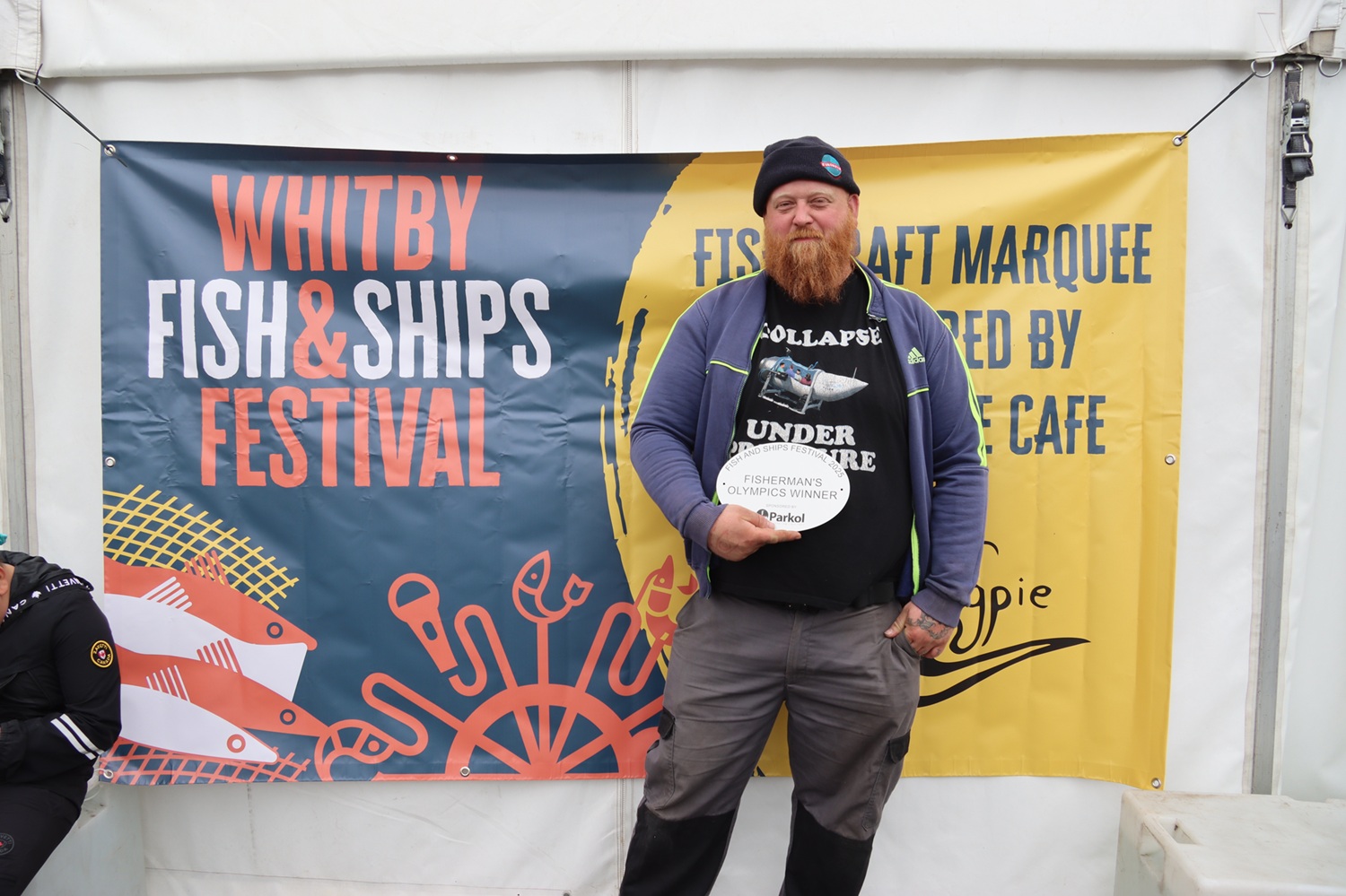
Fishing matters to coastal communities, and achieving sustainable fisheries means fishing families living well, with secure livelihoods. Festivals bring that appreciation and cultural value alive, and make it visible, collectively understood, and celebrated. They connect us in ways that aren’t always quantifiable, with a value that surely far exceeds the economic gains from the additional tourist trade. We need more of these events to take place around our coast.
Dr Sarah Coulthard (Sarah.Coulthard@newcastle.ac.uk), Newcastle University.
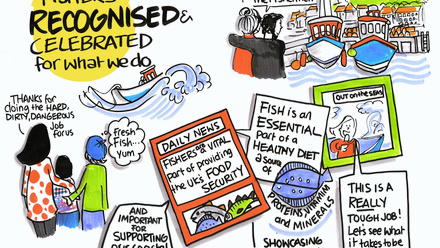
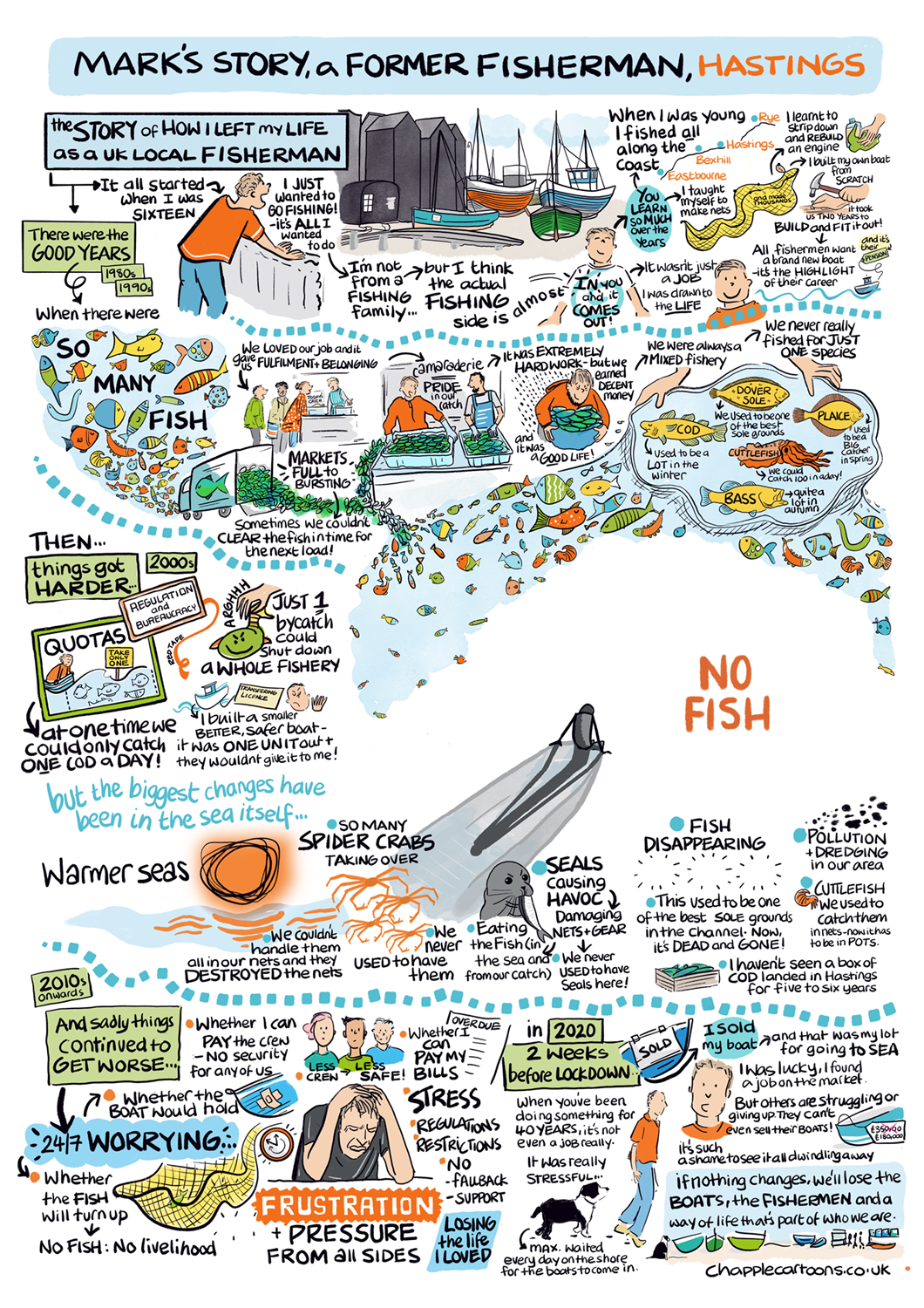
We are very grateful to Mark for consenting for his interview to be visualized through the artwork of Caroline Chapple and to Edward Ross, who conducted the interview in summer 2025 as part of his dissertation research at Newcastle University. The consortium gratefully acknowledges funding from the Esmée Fairbairn Foundation and the Association of IFCAs, enabling the exhibition roadshow around our coastline.
[1] Claesson, Stefan et al. 2005. Fishing heritage festivals, tourism, and community development in the Gulf of Maine. In: Peden, J.G. and Schuster, R.M. (comps. eds) 2006 Proceedings of the 2005 Northeastern Recreation Research Symposium. Newtown Square, PA: U.S. Department of Agriculture, Forest Service, Northeastern Research Station, pp. 420-428. doi.org/10.2737/NE-GTR-341
[2] Jessica Lin, Y.C. and Bestor, T.C. 2020. Embedding food in place and rural development: Insights from the Bluefin Tuna Cultural Festival in Donggang, Taiwan. Journal of Rural Studies 79: 373-381.